
FAAN, NCAA review flight patterns to ease congestion at airports
Abdullateef Fowewe
Nigeria’s aviation authorities are stepping up efforts to reduce peak-hour congestion at key domestic airports after a joint meeting reviewed airline schedules.
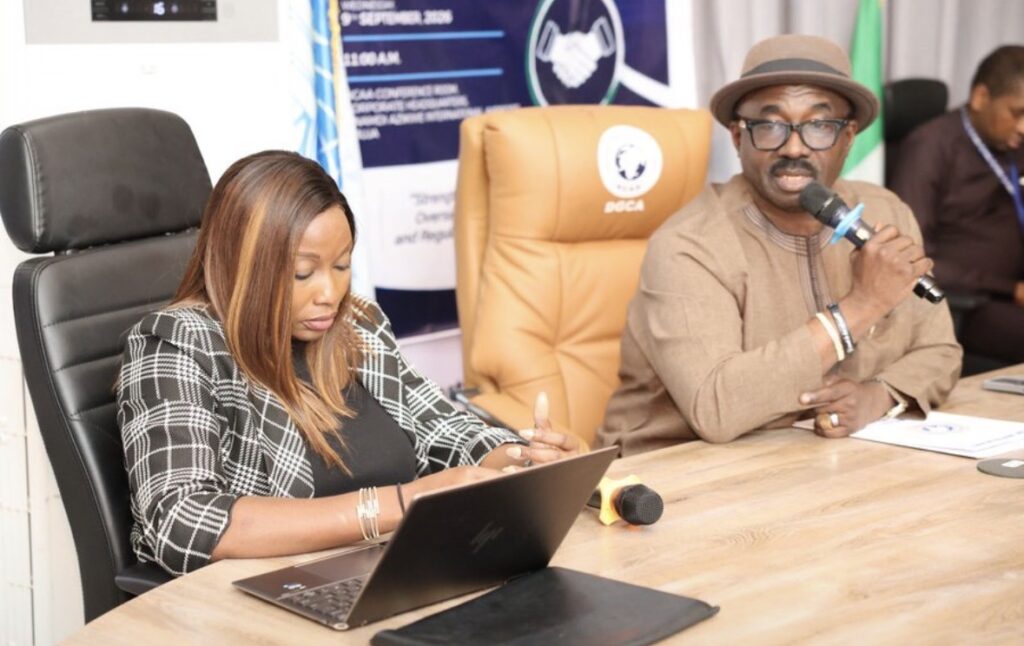
In a statement shared on Wednesday on the official X account of the Federal Airports Authority of Nigeria (FAAN) Managing Director, the agency said a consolidated assessment of domestic airline arrival and departure patterns for Lagos, Abuja, Kano, and Port Harcourt airports was presented at a joint meeting held on Tuesday.
“The assessment aims to identify peak periods of aircraft activity and recommend appropriate measures to enhance schedule coordination and mitigate congestion,” the post stated.
In attendance were FAAN Managing Director/Chief Executive Olubunmi O. Kuku, Nigerian Civil Aviation Authority (NCAA) Director-General Capt. Chris Najomo, directors from both agencies, and representatives of the Nigerian Airspace Management Agency (NAMA) and Bi-Courtney Aviation Services Ltd., the operator of Murtala Muhammed Airport Terminal 2 (MMA2) in Lagos.
The move comes amid growing pressure on Nigeria’s busiest airports.
Recent reports have highlighted shortages of aircraft parking spaces, particularly in Lagos, alongside concentrated morning departures that strain terminals, taxiways, and security screening.
Bi-Courtney has been advocating a Level 2 schedule-coordination or slot system to better distribute flights across the day and ease peak-period bottlenecks at MMA2.
FAAN has also been expanding apron space and holding stakeholder discussions to address inactive aircraft and capacity constraints.
Kuku, appointed FAAN’s first female managing director in December 2023, has prioritised operational improvements and stakeholder coordination. Capt. Najomo, a veteran pilot with more than 24,000 flying hours, was confirmed as substantive NCAA Director-General by the Senate in late September 2026 after serving in an acting capacity.
Improved schedule coordination is seen as a practical step that could reduce delays without requiring major new infrastructure in the short term, while longer-term apron expansions and collaborative decision-making tools continue.
Airlines, regulators, and terminal operators are expected to work further on any recommended changes to flight timings.