

Video: Iran trains civilian women in firearms as tensions with US, Israel persist
Abdullateef Fowewe
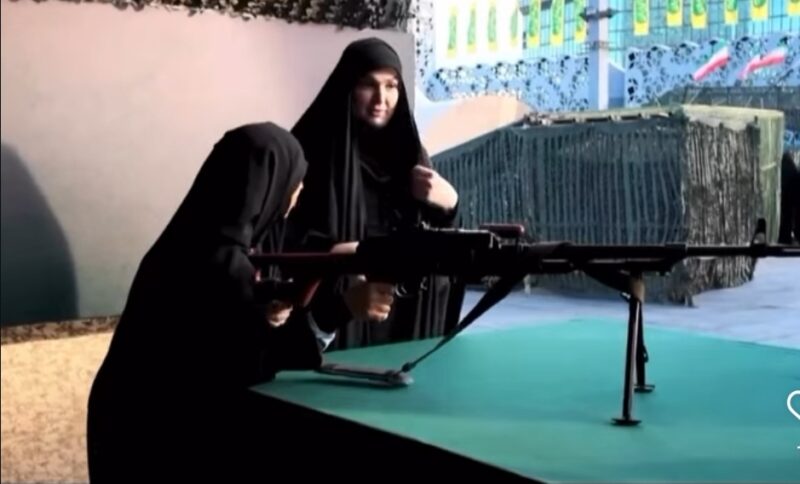
Iranian authorities have begun providing basic military training to civilian women in the capital, teaching them how to handle rifles and other weapons as part of a broader volunteer mobilization effort amid ongoing conflict with the United States and Israel.
https://www.instagram.com/reel/DeHmvofq-nl/?stkn=YWo4bnE2ZWpyNzZ0
The program, known as “Can Feda” (Ready to Sacrifice) or linked to the “Janfada” campaign, operates at public training sites including Imam Hussein Square and Haft-e Tir Square.
Volunteers receive instruction in long-barrel firearms, handguns, air-defense systems, multiple rocket launchers, first aid, and urban combat scenarios.
Women attend separate sessions three days a week for about three hours each, while men undergo longer training.
Officials say the initiative aims to organise up to 1,000 volunteer battalions for national defense and emergency response.
Footage and reports from the sites show women in traditional attire practicing with assault rifles and examining heavier equipment under the guidance of military instructors.
Participants have described the training as preparation to defend their families and neighborhoods in the event of further attacks or a ground invasion.
One volunteer told Anadolu Agency she wanted to be ready “until the end,” while another cited readiness against the United States and “enemies of Islam.”
The training centers form part of an expanded civilian mobilisation drive overseen by elements of the Islamic Revolutionary Guard Corps and Basij.
A new facility at Haft-e Tir Square opened around October 4, following earlier sites.
Army personnel are involved in delivering basic instruction that can progress to more advanced levels covering reconnaissance, neighborhood security, and weapons handling.
The current phase of hostilities began with joint U.S. and Israeli strikes on Iran on February 28, 2026.
An initial intense period of fighting lasting roughly 40 days ended in a truce on April 8, but subsequent clashes, particularly around the Strait of Hormuz, have kept tensions high.
Iran has sought to leverage control of the waterway, a critical oil transit route, while diplomatic efforts—including talks and a June memorandum of understanding have repeatedly stalled.
Recent weeks have seen continued friction, with Iran insisting there is no purely military solution and presenting conditions for reopening the strait, while U.S. officials, including President Donald Trump, have signaled that further decisions on the conflict could come soon.