

Tinubu orders judiciary to close loopholes shielding corrupt, tech-driven crimes
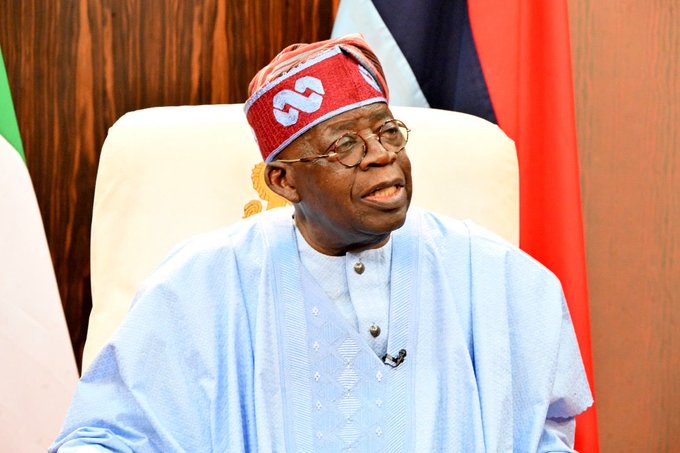
President Bola Tinubu
Abdullateef Fowewe
President Bola Tinubu has called on the judiciary to overhaul criminal justice processes and dismantle procedural loopholes that allow well-connected individuals and organised crime actors to escape justice through technicalities.
This was made known in a statement obtained from Stanley Nkwocha, Senior Special Assistant To The President on Media & Communications
Office of The Vice President).
Tinubu, represented by Vice President Kashim Shettima, spoke on Tuesday in Abuja at the 8th EFCC/NJI Capacity Building Workshop for Judges and Justices, themed “Investigation and Prosecution of Economic and Financial Crimes in a Digital Age.”
“Probe prosecution strategies, dismantle outdated precedents, and seal procedural gaps that politically exposed persons and organised crime actors exploit to delay or frustrate trial,” the President said.
He warned that financial and economic crimes constitute an existential threat to Nigeria, adding that corruption does not respect status or spare any arm of government.
“We must no longer permit legal pyrotechnics and procedural pedantry to shelter criminality. The Bench is not merely a mechanical arbiter of rules, but an active guardian of moral order and social equity,” Tinubu said.
The President argued that law must serve the public good rather than protect narrow interests through technical manoeuvres.
“Law is, by design, an instrument of social engineering; it must invariably prioritise the public good over narrow, selfish interests shielded by technical manoeuvres. Our courts must embody the spirit, and not just the arid letter, of the law,” he stated.
Tinubu said Nigeria cannot make meaningful progress against corruption “without an independent, progressive, and reform-minded Bench.”
The President urged judicial officers to adapt to a rapidly changing criminal landscape driven by technology, including blockchain and artificial intelligence.
“Technology has amplified the audacity and reach of illicit actors, ushering in sophisticated crimes driven by destructive ingenuity. The rise of blockchain technology and artificial intelligence has introduced unprecedented layers of complexity to traditional illicit activities,” he said.
He commended the EFCC’s recent efforts against cryptocurrency fraud and virtual-asset recovery, saying the agency recovered billions of naira in cryptocurrency investment-related fraud cases.
“In 2025, the agency secured the forfeiture of $22,417.91 worth of Bitcoin; 1,001,301.87 USDT in digital assets; and US$5.6 million linked to the CBEX scheme, while 192 foreigners arrested for cyber-terrorism and cryptocurrency fraud were successfully prosecuted and deported afterwards,” Tinubu said.
He added that the judiciary must complement law enforcement by rapidly expanding its capacity to handle digital-era crimes.
Chief Justice of Nigeria, Justice Kudirat Kekere-Ekun, said technological changes have affected how digital evidence is obtained and recorded, stressing that effective criminal justice administration now requires firm and disciplined case management.
She said sustained judicial education was already yielding improved conduct among judicial officers, particularly in case management and the dispensation of justice.
Senate Committee Chairman on Anti-Corruption and Financial Crimes, Senator Emmanuel Udende, said the workshop was timely because financial crimes involving politically exposed persons were becoming more sophisticated and often affected timely case management.
He assured stakeholders that the National Assembly would support the anti-corruption fight through proactive legislation.
Attorney-General of the Federation and Minister of Justice, Lateef Fagbemi, represented by Director of Public Prosecution, Rotimi Oyedepo, urged stronger synergy among justice-sector stakeholders.
“One arm of government alone could not effectively address the problem,” he said, calling on judges and lawyers to use the workshop to make investigations more thorough and prosecutions more diligent.
EFCC Chairman, Ola Olukoyede, described the workshop as a national imperative, saying the commission had recorded unprecedented convictions and financial recoveries in the past three years.
He, however, expressed concern that digital innovation was rapidly outpacing legal instruments and provisions for prosecution.