

Insurance industry can drive infrastructure financing, national development, says Oloyede
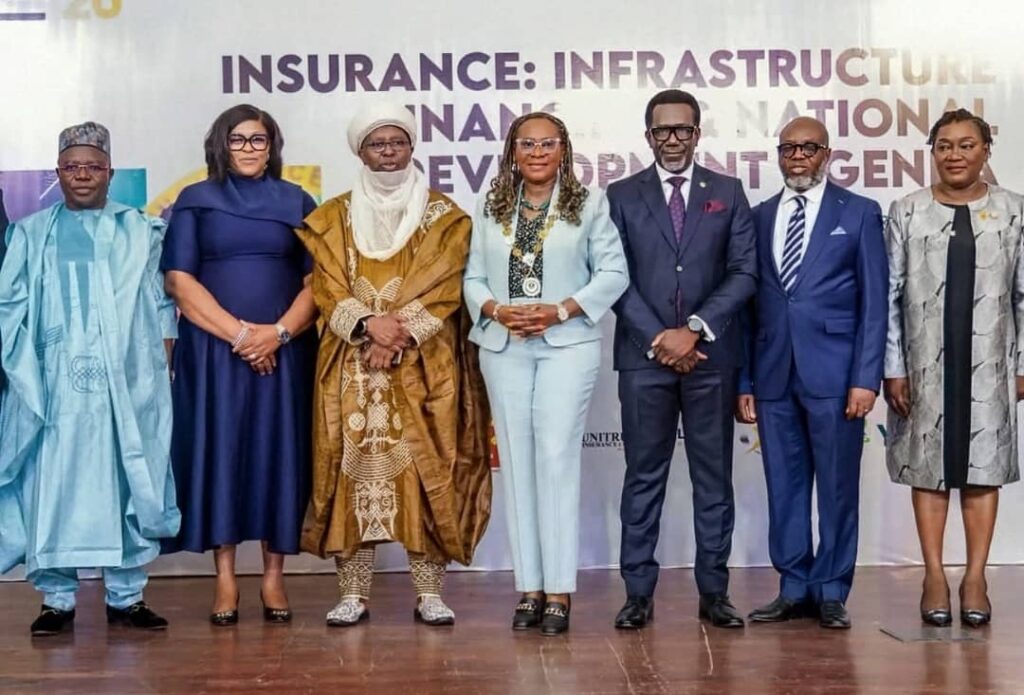
Deputy Chairman, House Committee on Insurance and Acturial Matters, Hon. David Abel Fuoh; Chairman, Nigerian Insurers Association, Mrs. Ebelechukwu Nwachukwu; Former Commissioner for Insurance, Alhaji Mohammed Kari; President, Nigerian Council of Registered Insurance Brokers, Mrs. Ekeoma Ezeibe; Commissioner for Insurance, Mr. Olusegun Omosehin; Special Adviser on Fiscal Risk Management and Sustainability, Dr Greg U. Ezeilo and Deputy President, NCRIB, Mrs. Olufunke Adenusi at the 2026 National Insurance Brokers Conference and Exhibition of the Council held in Abuja
Nike Popoola
The Federal Ministry of Finance has called on Nigeria’s insurance industry to play a central role in de-risking infrastructure projects and channelling long-term capital into national development.
Speaking at the 2026 National Insurance Brokers Conference and Exhibition, Minister of Finance and Coordinating Minister of the Economy, Professor Taiwo Oyedele said that the conference theme — “Insurance: Infrastructure Financing and National Development Agenda” has correctly identifies essentials for economic progress.
According to him, effective de-risking of projects, access to productive capital, and development that improves lives underpins successful economies in any nation.
He added that reliable power, efficient transport, water, healthcare facilities and digital platforms expand opportunity and raise living standards.
The Special Adviser on Fiscal Risk Management and Sustainability, Dr Greg U. Ezeilo who represented the Minister at the Conference said that money alone was not enough, stressing that projects must be properly prepared, commercially de-risked, socially justified, transparently procured and maintained throughout their lives if they were to become productive assets rather than sources of interrupted construction, lost revenue or failed public services.
He noted that Insurance stands as “a pillar of good omen” adding that when well designed, it strengthens the bankability and resilience of infrastructure by allocating construction, operational, liability and business-interruption risks to parties best able to manage them.
According to him, trust must be the golden rule of the handshake and the limits of insurance was that it could not make an unviable project viable. “It cannot take the place of sound engineering, credible contracts or responsible governance.”
“When properly embedded from the earliest stages, however, it can improve the overall financing and risk-management framework”.
He therefore urged Insurance Brokers to move beyond simply placing cover and help sponsor exposures, review exclusions, set appropriate limits and prepare effective claims arrangements.
On the capital side, the Minister highlighted that the recently celebrated recapitalisation exercise of the industry carried out by the National Insurance Commission (NAICOM) reported industry capitalisation of ₦1.079 trillion and approximately ₦4.8 trillion in institutional resources.
He said that the exercise has brought opportunity for the industry to direct an appropriate share of these funds into well-structured infrastructure investments while protecting policyholders, preserving liquidity and meeting prudential rules.
“Insurers with long-duration liabilities are particularly well placed to participate, provided the guiding principle remains clear: policyholders’ funds must be safe.
Trust was repeatedly described as the industry’s most valuable watchword.”
“For ordinary Nigerians, insurance is judged by the clarity of its promises and the fairness of its response when claims arise. Professional independence, transparent disclosure, accurate documentation and responsible advice were therefore presented as non-negotiable. A robust insurance culture supports national resilience by helping households and businesses recover from insured losses and reducing the wider economy’s vulnerability to fiscal shocks”.
“Infrastructure development itself must be inclusive and sustainable. Success is measured not merely by the value of projects financed, but by whether they deliver reliable services, support enterprise, connect underserved communities and remain useful over the long term. Risk assessment should therefore cover maintenance, environmental exposure, climate-related hazards and the needs of host communities, with prevention and resilience receiving as much attention as post-loss compensation”, he said.