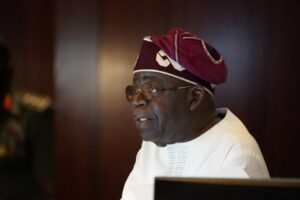

Advancing pension justice: How Bola Tinubu Administration is translating Section 173(3) into tangible relief for retirees

Ivor Takor
Report by Ivo Takor, mni
Vice Chairman/Chairman, Human Rights Committee, Nigerian Bar Association (NBA) Epe Branch
Nigeria’s pension reform was heralded in 2004 as a watershed moment in safeguarding the dignity and welfare of retirees. The Contributory Pension Scheme (CPS), established under the Pension Reform Act 2004 and strengthened by the Pension Reform Act 2014, was designed to cure the chronic inefficiencies, corruption, and unsustainable liabilities of the old Defined Benefit Scheme (DBS). It promised transparency, sustainability, and, above all, respect for the human dignity of public servants who had devoted their productive years to national service.
Yet, more than two decades after that ambitious reform, thousands of federal public service retirees found themselves ensnared in a cycle of neglect, unpaid entitlements, and diminishing purchasing power. The promise of reform was undermined by successive federal governments’ persistent failure to comply with extant pension laws and constitutional mandates. The consequences were profound: economic hardship, psychological distress, and a quiet erosion of trust in public institutions.
At the center of this legal and moral failure lies Section 173(3) of the Constitution of the Federal Republic of Nigeria (as amended), which provides unequivocally:
“Pensions shall be reviewed every five years or together with any Federal Civil Service salary reviews, whichever is earlier.”
This constitutional guarantee is reinforced by Section 39(3) of the Pension Reform Act 2014, which mandates periodic pension reviews to ensure parity between retirees and serving officers. These provisions are not discretionary policy guidelines; they are binding legal obligations rooted in constitutional supremacy.
However, despite this clear legal framework, successive administrations excluded CPS retirees from pension adjustments granted to their counterparts under the DBS. This discriminatory practice offended the foundational principle of equality before the law, enshrined in Section 42 of the Constitution, and effectively penalized those who retired under a supposedly reformed and more transparent system.
From a human rights perspective, the failure to review pensions in line with constitutional dictates is not merely an administrative lapse; it is a violation of socio-economic rights and the right to dignity of the human person. Pension benefits constitute deferred wages, earned entitlements protected by law. Their arbitrary withholding or erosion through inflation without statutory review amounts to constructive deprivation.
In this context, the recent actions of the administration of President Bola Ahmed Tinubu mark a significant and commendable shift toward pension justice.
The turning point began in November 2024, when the Federal Government released ₦44 billion to settle accrued pension rights of federal retirees in Ministries, Departments, and Agencies (MDAs). According to the National Pension Commission (PenCom), this intervention covered retirees who exited service between March 2023 and September 2023.
For affected retirees, this release was not merely a fiscal transaction; it was the restoration of dignity. Many had endured months of uncertainty, unable to access funds that represented their life savings. The disbursement signaled a renewed governmental commitment to the rule of law and to the constitutional protection of pension rights.
The administration’s resolve became even more evident on February 5, 2025, when the Minister of Finance and Coordinating Minister of the Economy, Mr. Wale Edun, announced that the Federal Executive Council (FEC) had approved the issuance of a ₦758 billion pension bond.
This landmark decision was not a routine budgetary adjustment. It was a strategic and forward-thinking intervention designed to clear the backlog of pension liabilities that had accumulated over several years under the CPS. By opting for a bond issuance mechanism, the administration demonstrated fiscal creativity, transparency, and a commitment to long-term sustainability.
Of the ₦758 billion bond, ₦253 billion was earmarked to settle accrued pension rights for retirees from treasury-funded MDAs, while ₦388 billion was allocated to clear outstanding pension increases dating back to 2007. These increases covered adjustments made in 2007, 2010, 2019, and 2024, years in which serving officers benefited from salary reviews but CPS retirees did not receive corresponding adjustments.
The bond’s implementation represented a concrete translation of Section 173(3) from a dormant constitutional promise into tangible economic relief. It affirmed that constitutional provisions are not ornamental declarations but enforceable commitments.
By December 18, 2025, the National Pension Commission commenced the disbursement of the bond proceeds. By the end of December 2025, all arrears had reportedly been paid, and monthly pensions adjusted to appropriate levels in line with statutory requirements.
This development is legally significant for several reasons.
First, it restores constitutional compliance. The periodic review of pensions is no longer theoretical but operational. Second, it advances equality before the law by extending long-denied increases to CPS retirees, thereby correcting years of discriminatory practice. Third, it strengthens institutional credibility by demonstrating that the executive arm of government can act decisively to rectify inherited injustices.
From a human rights lawyer’s vantage point, the implications are profound. The right to social security, though not always expressly codified as a justiciable fundamental right under Chapter IV of the Constitution, is firmly embedded in Nigeria’s constitutional architecture and international obligations. When pensioners are paid fairly and promptly, the state affirms their inherent dignity and recognizes their service as part of the nation’s collective heritage.
Moreover, pension justice has broader socio-economic ramifications. Retirees are not economic dead-ends; they are active participants in local economies, caregivers in extended families, and stabilizing forces in communities. Ensuring their financial security mitigates poverty, reduces dependency, and promotes intergenerational equity.
The plight of Nigeria’s public service retirees stands as a sobering reminder of the consequences of governmental inertia. Each unpaid pension bond, each unimplemented review, and each delayed benefit represents not just a bureaucratic failure but a breach of constitutional duty and national trust.
The recent corrective measures under the Tinubu administration demonstrate that political will, when aligned with constitutional obligation, can yield transformative outcomes. They show that pension reform is not merely about actuarial calculations or financial engineering; it is about justice.
Nonetheless, vigilance remains essential. Sustaining these gains will require institutionalizing timely releases of accrued rights, automating review mechanisms in line with salary adjustments, and strengthening oversight to prevent future backlogs. The culture of compliance must become permanent, not episodic.
In conclusion, the translation of Section 173(3) into measurable relief for retirees under the CPS marks a decisive step toward restoring faith in Nigeria’s pension system. It reflects a maturing understanding that constitutional guarantees must be honoured in practice, not merely proclaimed in text.
For Nigeria’s retirees, long marginalized by delay and discrimination, the recent interventions are more than fiscal policy; they are a reaffirmation of dignity. And for the nation, they signal that pension justice, long deferred, can indeed be delivered when the rule of law is treated not as rhetoric, but as command.