Army goes multi-domain, intelligence-led to crush asymmetric threats — COAS
Abdullateef Fowewe
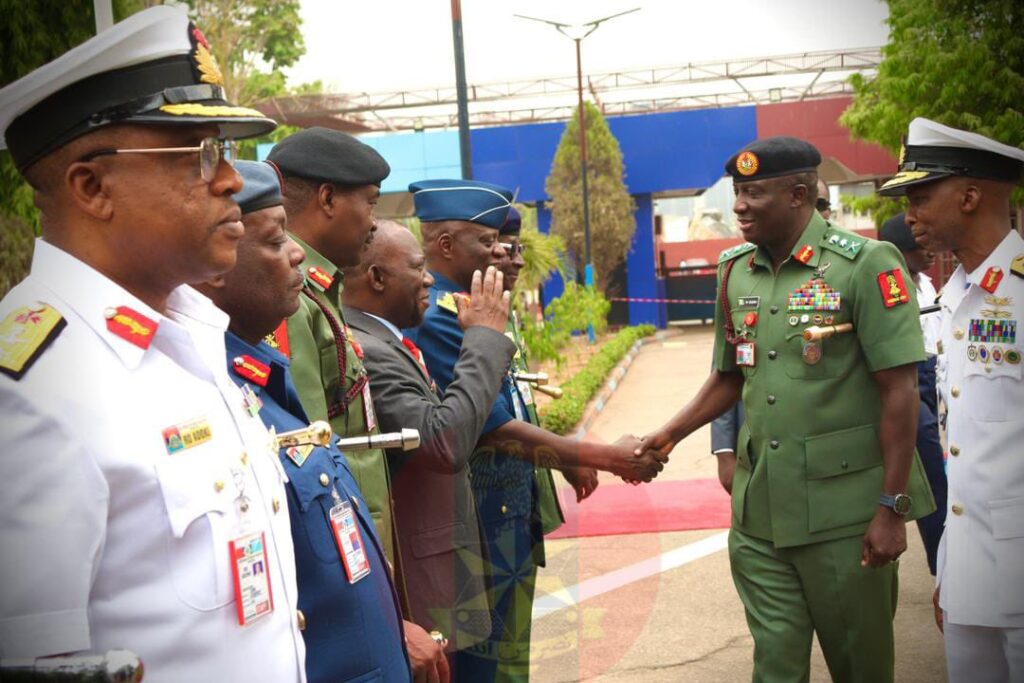
The Chief of Army Staff (COAS), Lieutenant General Waidi Shaibu, has vowed to ramp up the Nigerian Army’s fight against terrorists, bandits, and other non-state threats using a high-tech, intelligence-driven strategy.
This was obtained in a statement on Tuesday by Colonel Appolonia Anele, Acting Director of Army Public Relations.
Speaking Tuesday at the National Defence College (NDC) Course 34, Shaibu delivered a lecture titled “Combating Asymmetric Threats to National Security in Nigeria: The Nigerian Army in Perspective.”
He described a shift in global security from state wars to “complex intra-state conflicts dominated by non-state actors, including terrorists, insurgents, bandits, cybercriminals and transnational organised crime networks that deliberately exploit governance gaps, societal vulnerabilities and emerging technologies.”
The Army, he said, has “deliberately recalibrated its operational doctrine, force posture and employment of capabilities through a comprehensive multi-domain strategy,” blending kinetic strikes, intelligence fusion, inter-agency teamwork, joint operations, and global partnerships.
Shaibu detailed region-specific gains noting that in the North-East, counter-insurgency has degraded terrorists via “offensive manoeuvres, intelligence-driven strikes and population-centric stabilisation efforts.”
North-West joint ops target bandits’ logistics and protect communities, while North-Central efforts focus on “area domination, protection of civilians and the containment of communal and militia-related violence.”
He spotlighted tech upgrades, better training, and sister-service collaboration boosting “situational awareness, operational reach and mission effectiveness.”
Yet, he warned that true security demands more, “Contemporary national security transcends territorial defence to encompass economic security, cyber resilience, environmental stability and human security.”
“Enduring peace can only be achieved when military operations are reinforced by effective governance, justice delivery and inclusive socio-economic development,” Shaibu stated.
He urged NDC participants—Nigeria’s “future strategic and operational leaders”—to adopt “integrated, forward-looking security frameworks that address both the immediate manifestations and underlying drivers of conflict.”
The COAS closed with reassurance: the Army stands “steadfast” to “defend national sovereignty, protect lives and property, and secure critical national infrastructure, even as threats continue to evolve in form and complexity.”