ECOWAS declares regional state of emergency amid rising coups, security threats
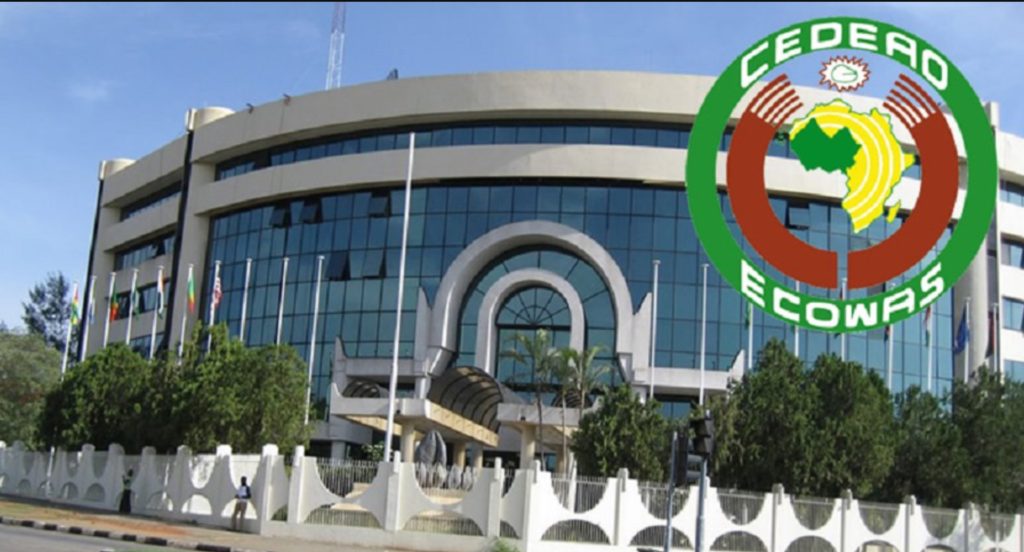
ECOWAS
Abdullateef Fowewe
The Economic Community of West African States (ECOWAS) has officially declared a state of emergency across the region, citing worsening political instability and security challenges.
This announcement was made by ECOWAS Commission President Omar Touray on Tuesday during the 55th Session of the Mediation and Security Council in Abuja.
Touray gave a stark assessment of the region’s deteriorating political and security climate, revealing that member states average a “high risk” rating due to recent developments.
He said, “Events of the last few weeks have shown the imperative of serious introspection on the future of our democracy and the urgent need to invest in the security of our community.”
He highlighted several critical risk factors affecting the region.
Key concerns include ongoing military interventions in Guinea-Bissau and Benin, undermining peace and governance.
The report also points to non-compliance with transition norms, particularly where military leaders refuse to fully relinquish power to civilian authorities, as seen in Guinea.
This trend according to him contributes to weakening democratic processes and governance structures.
Additionally, the erosion of electoral inclusivity is becoming more pronounced, raising fears over fair representation and political legitimacy.
The expansion of terrorists, armed groups, and criminal networks further exacerbates insecurity, undermining regional safety.
Finally, increasing geopolitical pressures are straining cohesion among nations, complicating collective efforts to address these challenges and maintain stability. Analysts urge regional and international actors to intensify cooperation in tackling these multifaceted risks.
Touray warned, “Elections have become a major trigger of instability in our community,” underscoring the fragility of democratic processes.
The Commission President called for more frequent Mediation and Security Council meetings and a strengthened regional approach to confront terrorism and banditry, which “operate without respect for territorial boundaries.”
He emphasised the need for immediate ministerial oversight on crises, political transitions, and safeguarding regional unity.
He also raised alarms about the humanitarian fallout, referencing UNHCR data showing approximately 7.6 million forcibly displaced persons in West Africa, with the largest populations in Nigeria, Burkina Faso, Niger, and Mali.
Touray urged member states to “take decisions and actions that will reverse this trend” and reassured citizens, “We will continue to work harder to promote a peaceful, stable and stronger region for the overall benefit of Community citizens.”
Sierra Leone’s Minister of Foreign Affairs and Chair of the Council of Ministers, Timothy Kabba, echoed these concerns, calling for decisive action to protect democracy amid growing instability.
He stated, “The recent coup in Guinea-Bissau and the attempted coup in the Benin Republic are sobering reminders of the fragility of our democratic gains.”
Kabba stressed the urgency for substantive outcomes from the summit, saying, “Our people no longer have patience for commitments that remain unfulfilled. They expect us to confront these challenges with seriousness, unity and purpose.”
The Mediation and Security Council’s meeting precedes a summit of ECOWAS Heads of State and Government, expected to debate strategies to restore stability in a region now challenged by coups, attempted coups, and fragile political transitions.
West Africa faces a critical juncture as military-led regimes govern Mali, Niger, Burkina Faso, and now Guinea-Bissau, with recent attempted coups in Benin emphasising the pressing need for unified regional action to safeguard democracy and security.