FG unveils strategy to tackle food inflation, imports
Abdullateef Fowewe
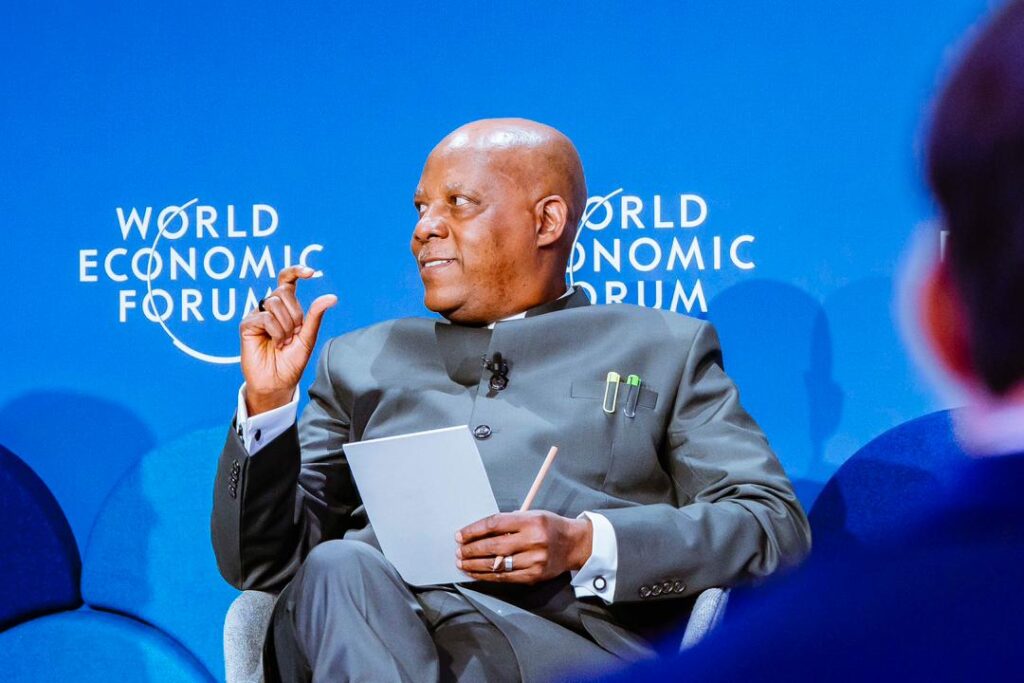
Vice President Kashim Shettima has declared Nigeria’s food security a “macroeconomic, security, and governance issue” during a high-level panel at the 56th World Economic Forum (WEF), unveiling a multi-pronged strategy to boost production, combat climate challenges, and reduce import dependence.
Speaking on the panel “When Food Becomes Security” at the Congress Centre, Shettima emphasised that the Federal Government under President Bola Tinubu is shifting from viewing food security narrowly as an agricultural matter to a “strategic pillar for governance, economic stability, and regional cohesion.”
He outlined three core pillars: ramped-up food production, environmental sustainability, and stronger West African integration.
Nigeria’s diverse ecology demands tailored solutions, Shettima noted.
“In the Sahelian North, we are dealing with desertification, deforestation and drought. In the riverine South and parts of the North Central, flooding is our major challenge,’ he said.
To counter this, the government is rolling out drought-resistant, flood-tolerant, and early-maturing varieties of staples like rice, sorghum, and millet.
Security threats in key food-producing regions pose a major hurdle, but Shettima announced the launch of the Back to the Farm Initiative to resettle displaced farmers.
This includes agricultural inputs, insurance, and capital access, alongside “food security corridors and strengthening community-based security engagements so farmers can return safely to their land.”
Tackling macroeconomic pressures, Shettima targeted Nigeria’s reliance on imported wheat, sugar, and dairy, which fuel inflation and drain foreign exchange.
“Our strategy is to accelerate local production and promote substitutes such as sorghum, millet and cassava flour to correct these structural imbalances,” he said.
The plan aims to curb inflation while fostering smallholder farmers and fishers as “investable at scale” within 12 months.
Shettima hailed Nigeria’s awakening as the “African giant” under Tinubu’s Renewed Hope Agenda, urging deeper AfCFTA implementation for intra-African trade beyond its current 10.7%.
“In Africa, especially in light of global trends, intra-African trade has almost become a necessity,” he added, expressing optimism for climate adaptation scaling from pilots to nationwide reality.
The strategy positions agriculture as a frontline defense against economic shocks, security risks, and global disruptions, with Shettima confident it will deliver stability and growth.