Market Cap set to double with new listings, banking recapitalization – NGX Chairman
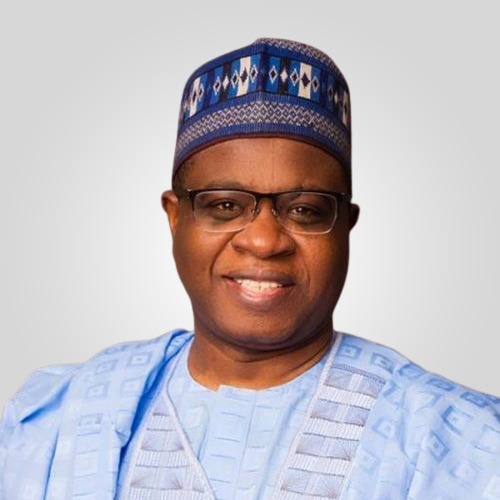
Chairman of the Nigerian Exchange Group Plc, Alhaji (Dr) Umaru Kwairanga
Nike Popoola
The Nigerian capital market demonstrated remarkable resilience and growth in 2025, driven by strong investor confidence, regulatory reforms, and robust corporate activity, the Chairman of the Nigerian Exchange Group (NGX), Alhaji (Dr.) Umaru Kwairanga, has revealed.
In a year-end review and forward-looking statement, Kwairanga highlighted that both primary and secondary markets recorded impressive performances, reinforcing Nigeria’s position among Africa’s top-performing equity markets.
Here’s report by Alh (Dr) Umaru Kwairanga, Chairman NGX Group.:
2025 Capital Market Review and a Forward-Looking Agenda for 2026
The Nigerian Capital Market in 2025 has demonstrated resilience, dynamism and renewed investor confidence amid a complex macroeconomic backdrop. Through sustained reforms, deeper market participation and robust corporate actions, the Nigerian Exchange (NGX) delivered an enviable performance across primary and secondary markets, making measurable progress toward our strategic vision of a globally competitive, inclusive and innovation-driven capital market.
Market Performance Overview
1. Secondary Market Momentum:-
The NGX equities market sustained strong performance in 2025, continuing its bullish momentum from prior years. By 24 December, overall turnover on Equities at the Exchange more than double year-on-year activity, affirming increased market engagement. Domestic investors accounted for roughly 79–80% of transaction value, with foreign investors contributing about 21% of total turnover — a sign of both local confidence and emerging offshore interest.
Despite global uncertainties and perennial FX concerns, the All-Share Index (NGX-ASI) registered robust gains, placing the NGX among the top-performing African stock markets in 2025 with a near 49.17% as at 24th December 2025.
2. Capitalisation and Market Depth
Total market capitalisation continued to expand. As of December 2025, the aggregate value of equities, debt instruments and ETFs listed on NGX stood at approximately ₦149.88 trillion, up sharply from the prior year. Equities remained dominant, contributing about 65.31% of overall capitalization of over N98Trillion.
This growth was supported by broad-based sectoral strength, strong corporate earnings, and investor appetite for fundamentally healthy companies, particularly in banking, consumer, industrial and telecoms sectors.
3. Primary Market Activity and Capital Raising:-
The capital market also played a pivotal role in mobilising long-term finance. Total listings and capital raised — boosted by strategic bank recapitalisation efforts — surged to an estimated ₦6.34 trillion in new listings, reflecting strong issuer confidence and investor receptivity.
Foreign Participation: Progress and Challenges
Foreign portfolio investment (FPI) into the NGX witnessed meaningful year-on-year increases, with certain reporting periods showing double-digit growth in offshore trading activity and flows.
However, foreign participation remains modest relative to domestic activity, averaging roughly 20–21% of total turnover in recent months, with foreign investor engagement constrained by lingering macroeconomic uncertainty, exchange rate dynamics and policy ambiguity around aspects like capital gains tax.
While the absolute values of foreign investment grew — reflecting increased interest in Nigerian assets — the broader strategic imperative is to deepen sustained and diversified foreign capital flows.
Key Drivers in 2025
• Policy and regulatory reforms — Especially those targeting exchange rate unification and market transparency — have elevated confidence and facilitated capital attraction.
• Realigning financial sector capitalisation — Driven by CBN-mandated recapitalisation and corporate actions.
• Enhanced retail and institutional participation — Enabled by digital platforms, financial literacy and robust dividend returns.
Looking Ahead to 2026:-
Strategic Priorities and Advice
As we transition into 2026, the imperative is not only to sustain this positive trajectory but to deepen market resilience, international competitiveness and inclusive growth. To this end, I offer the following recommendations:
1. For Stakeholders (Investors & Issuers)
• Embrace long-term investment frameworks: Encourage diversified, long-horizon portfolios that support market depth and capital stability.
• Leverage technology for engagement: Both institutional and retail participants should adopt digital tools that broaden access, reduce costs and enhance transparency.
• Focus on ESG and governance: Strong environmental, social and governance practices attract global capital and are critical for sustainable valuations.
2. For Regulators (SEC, CBN & Policy Makers)
• Harmonise policy frameworks: Clear, consistent policies on taxation, FX and cross-border repatriation will reduce volatility and uncertainty for foreign investors.
• Enhance regulatory clarity on key market levers such as capital gains tax, clearing and settlement efficiency, and harmonised disclosure standards.
• Promote product innovation: Encouraging development of derivatives, exchange-traded products and securitised instruments will expand the investor base and risk-management tools.
3. For Market Operators (NGX & Intermediaries)
• Increase market education: Continued investor education will broaden participation, deepen liquidity and build confidence.
• Enhance infrastructure and market access: Investment in technology platforms, efficient settlement systems and cross-border connectivity will strengthen our competitive edge.
• Champion market integrity: Adherence to high standards of transparency and enforcement underpins investor trust — domestic and international.
Conclusion:-
The Nigerian capital market achieved a commendable performance in 2025, driven by reform implementation, stronger corporate actions and resilient market participation. As Chairman of NGX Group Plc, I am confident that the foundations laid this year position our market to capture greater opportunities in 2026 and beyond. Central to this journey is continued collaboration among investors, regulators and market operators to build a deeper, more inclusive and globally attractive capital market ecosystem.