

New tax laws will help, not hurt Nigerian airlines — Presidency
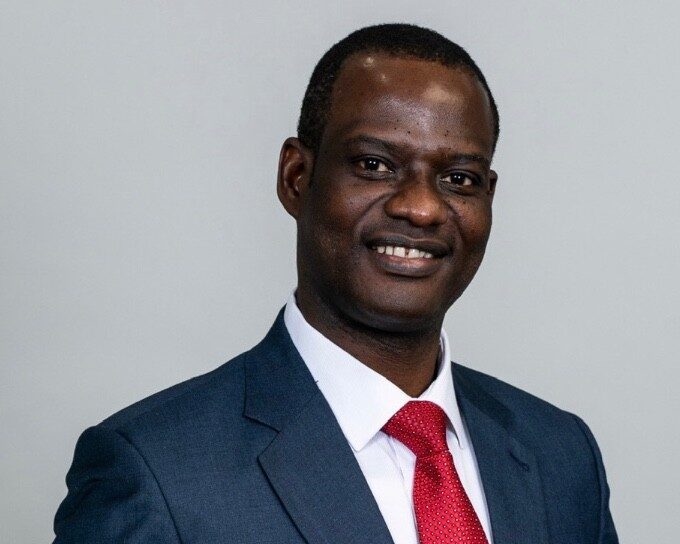
Chairman, Presidential Fiscal Policy and Tax Reforms Committee, Taiwo Oyedele
Abdullateef Fowewe
The Chairman of the Presidential Fiscal Policy and Tax Reforms Committee, Taiwo Oyedele, has insisted that the Federal Government’s new tax laws will ease the financial pressure on Nigerian airlines rather than worsen it.
Clarifying in a statement on Monday, Oyedele declared that, “the new tax laws will help, not hurt airlines,” stressing that the reforms are designed as “part of the solution, not the source of the problem” to the aviation sector’s woes.
Oyedele said government recognises “the genuine challenges facing Nigeria’s aviation industry, particularly the burden of multiple taxes, levies, and regulatory charges,” and revealed that his committee has “engaged extensively with airline operators and those engagements are ongoing.”
Among the key changes he highlighted is the removal of the long‑criticised 10 percent withholding tax on aircraft leases, which he described as “the single biggest tax burden on airlines.” Under the old regime, “on a 50 million dollar aircraft lease, an airline currently pays 5 million dollars in WHT, which is non-recoverable and therefore directly increases operating costs and strains cash flow.”
Eliminating this, he said, is “a major structural relief for the sector.”
On value added tax, Oyedele argued that the new regime will make airlines fully VAT‑neutral.
He noted that while the COVID‑era VAT suspension looked attractive, it had “a hidden cost” because airlines could not recover input VAT, meaning it became embedded in their expenses.
Under the new law, “any VAT paid on imported or locally procured assets, consumables, and services will become fully claimable,” with refunds mandated within 30 days and an option to offset VAT credits against other taxes.
This, he said, will “directly reduce cost pressure and improve liquidity.”
He further clarified that existing import duty exemptions on commercial aircraft, engines and spare parts “remain fully in place,” and that there is “no reversal or new burden introduced under the tax reforms.”
Addressing fears over ticket hikes, Oyedele maintained that the net effect of a 7.5 percent VAT on fares in a VAT‑neutral system is far less than many fear.
“Even in a worst-case scenario where VAT were not claimable, the maximum impact would still be 7.5 percent, not the price increases being suggested,” he said, citing examples where a N125,000 ticket would rise to no more than N134,375, and a N350,000 ticket to N376,250.
He also revealed that the new law “provides a framework to reduce corporate income tax from 30 percent to 25 percent which will benefit airlines,” and that several earmarked levies, including Tertiary Education Tax, NASENI, NITDA and Police levies, have been folded into a single Development Levy to reduce complexity and improve certainty.
On the wider issue of multiple charges on flight tickets, Oyedele admitted that “the multiplicity of levies imposed on airlines and flight tickets is real,” but insisted “these charges are not created by the new tax laws. It is therefore incorrect to attribute them to the reform.”
He added that government is “actively working with operators and relevant agencies to achieve a lasting solution,” and that tax harmonisation provisions mean “the situation can only improve, not worsen, from 2026.”
Summing up, Oyedele stated that the reforms “provide a strong legal and policy framework to resolve the long-standing tax challenges in the aviation sector, reduce operating costs for airlines, and ensure minimal impact on passengers.”
He warned that “claims not grounded in fact do not help this process,” insisting that “the new tax laws are not the problem, they are a critical part of the solution.”
Reacting to Oyedele’s explanation, the Minister of Aviation and Aerospace Development, Festus Keyamo, took to X to endorse the clarification.
“Thank you @taiwoyedele for this clarification. As the head of the aviation sector, I will draw the attention of the entire industry to this,” Keyamo wrote, signalling official backing from within the aviation ministry for the new tax framework.