NICA writes President Bola Tinubu; Calls for a stronger credit economy hegemony
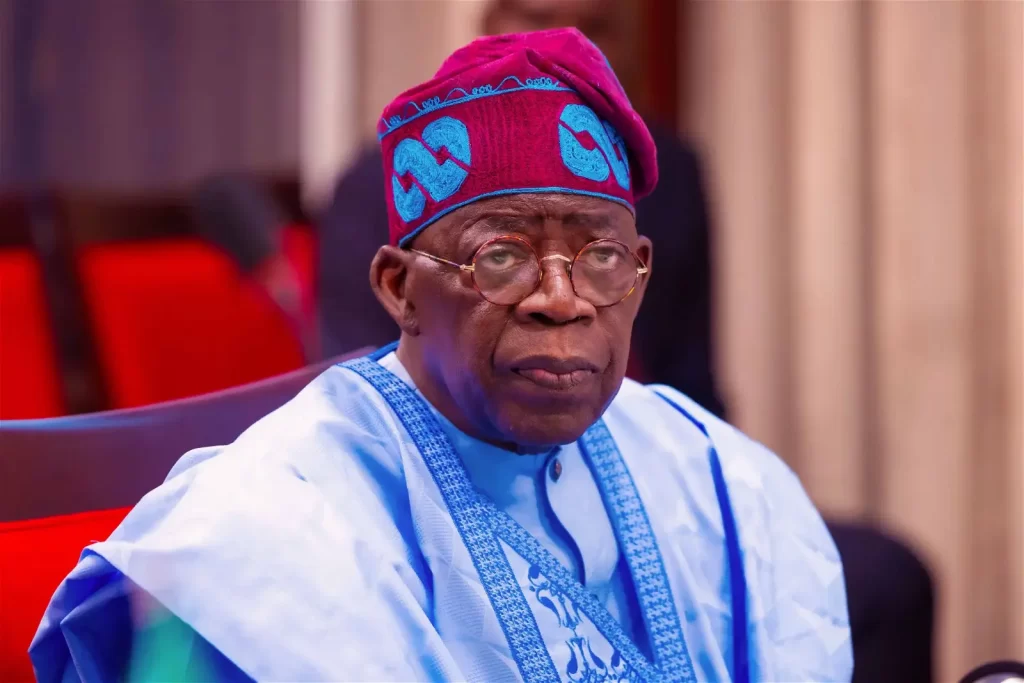
President Bola Ahmed Tinubu
The National Institute of Credit Administration (NICA), chartered, has reiterated its statutory mandate and readiness to support President Bola Ahmed Tinubu and the Federal Government in transforming Nigeria from a cash-based economy into a sustainable, credit-driven ecosystem.
Inline with the provisions of the NICA Act 26 of 2022, the Institute is empowered to support President Tinubu’s administration and the Federal Government in matters relating to credit administration, credit management, and the promotion of ethical credit practices, whether formally invited or not. NICA emphasises that achieving a functional credit economy requires deliberate collaboration, cooperation, and consultation with specialist professional institutions.
NICA has consistently committed to training Nigerians, creating nationwide awareness, and advocating for the national policy shift to promote the culture of honesty, integrity, and trustworthiness necessary for credit business transactions, along with the stimulation of legal provisions to hasten credit default recoveries. These virtues, the Institute notes, are fundamental build up to confidence in both consumer and business credit activities for a resilient credit economy.

Dr. (Mrs) Markie Idowu, FICA (President/Chairman NICA Governing Council)
While acknowledging efforts by the government towards creation of access to credit-induced economic reforms, NICA expressed concern that insufficient engagement with professional institutions could slow down the pace of meaningful transformation. Nigeria’s economy, the Institute stated, is complex and requires inclusive thinking that embraces expert input into policy formulation and implementation.
“Nigeria belongs to all Nigerians,” the Institute noted. “Governments succeed best when they approach policy development with open minds and hands, engaging credible, transparent, and well-structured professional bodies with statutory powers, who are genuinely interested in national economic development.” The action of the federal government which seem unready to
embrace professional synergy is a huge disincentive to the credibility and integrity of its plans and policies.
As the nation moves into 2026, NICA congratulates Nigerians and those in government for sustaining governance and economic reform momentum, while at the sametime, urging the Federal Government to institutionalisea culture of collaboration and partnership with critical stakeholders. According to the Institute, such openness is essential for entrenching a strong credit culture society and achieving long-term economic robustness. Essentially, the goal of the government is to launch Nigerians into a people-centred economic model which affords everyone the opportunity to create jobs, make wealth, and contribute to astronger GDP. That economic model is the credit economy. But government alone driving the process might be fruitless. No government knows it all. Federal government should work with the body of experts statutorily recognized, taking advantage of why such bodies exist under the legislative framework of the Federal Republic of Nigeria in the first instance.

Some statutory professional bodies, by the nature of their mandates, have more to do with and for the government than others. Such is the case with the National Institute of Credit Administration (NICA), chartered. It would therefore be a misapplication to suggest otherwise.
Professional bodies like to keep their credibility and reputation. Nowhere in the world has any professional body gone out, cap in hand, begging government for collaboration. It is the government that do asks for their collaboration,
requesting inputs into policies that are being formed. A government that wants to succeed goes out to ask for partnership discreetly.
In the case of Nigeria moving from a cash-based economic system to a credit- based economy model, government seems to be doing it all alone, and as a result, there are lots of avoidable policy errors and unclear implementation roadmap in what we have seen so far. These errors could have been avoided if government-recognized professional bodies in the credit economy management arena had been consulted.
Such bodies don’t charge much, but they will charge for the value of the input they provide in shaping such policies; hence, they are not funded by the government.
As NICA congratulates Nigerians and the people in government for making it to 2026, it urges the federal government to consider opening the culture of collaboration and partnership more critical with stakeholders in an honest and straightforward manner so as to make Nigeria great again.
NICA reaffirmed its commitment to working with the federal and state governments, the media, and other stakeholders to advance Nigeria’s credit economy agenda in an honest, professional, and straightforward manner for the collective good of the country.