Video: Shettima back in Abuja, says Nigeria reclaims global economic spotlight
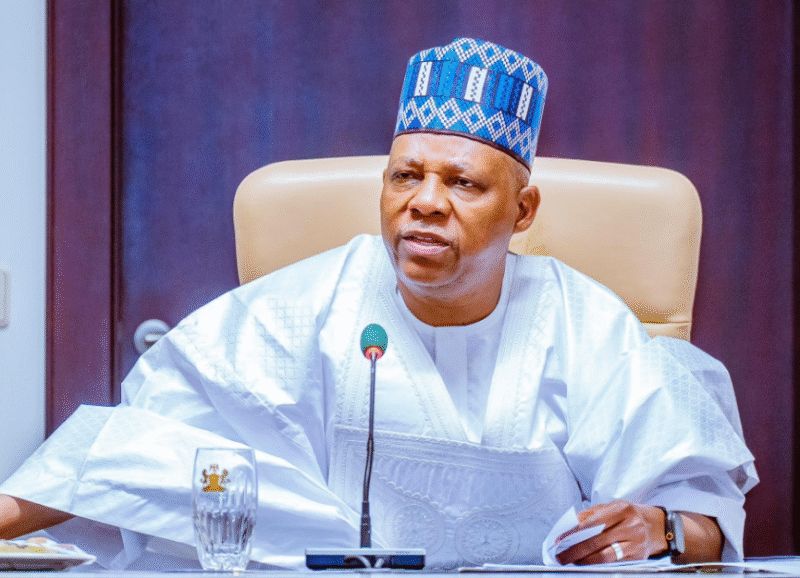
Vice President Kashim Shettima
Abdullateef Fowewe
Vice President Kashim Shettima has returned to Abuja on Saturday after a successful week-long diplomatic and economic mission to Guinea-Conakry and Switzerland, proclaiming that “Nigeria has reclaimed a frontline seat in global and regional policy conversations.”
Video: Shettima back in Abuja, claims Nigeria reclaims global economic spotlight
This was obtained in a statement issued on Saturday by Stanley Nkwocha, Senior Special Assistant to the President on Media & Communications in the Office of the Vice President.
Shettima, who represented President Bola Tinubu at the inauguration of Guinea’s President Mamadi Doumbouya and led Nigeria’s delegation to the 56th World Economic Forum (WEF) Annual Meeting in Davos, landed at Nnamdi Azikiwe International Airport to a warm reception.
The trip underscored Nigeria’s renewed commitment to West African solidarity and economic repositioning under the Renewed Hope agenda.
In Conakry, Shettima reaffirmed Nigeria’s ECOWAS leadership while forging bilateral ties in agriculture and manufacturing.
In Davos, highlights included the commissioning of Nigeria House Davos—Nigeria’s first sovereign pavilion on the Davos Promenade.
This permanent investment hub spotlights opportunities in solid minerals, agriculture, and the digital economy.
During a high-level WEF session titled “When Food Becomes Security,” Shettima positioned agriculture as “a strategic pillar of national security and macroeconomic stability,” unveiling Nigeria’s new national food security framework.
He also collaborated with former President Olusegun Obasanjo, former Vice President Yemi Osinbajo, and Finance Minister Wale Edun to champion the Accra Reset Initiative, pushing African industrialisation through domestic capital and value chains.
On the economic front, Shettima wooed investors with stabilizing indicators: a projected 4.4 per cent GDP growth in 2026, inflation dropping to 12.94 per cent, Nigeria’s shift to a net exporter of refined petroleum via the Dangote Refinery, and booming digital talent exports.