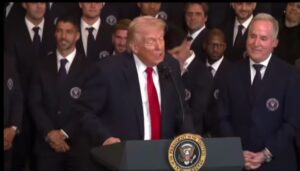
Video: ‘These plans have long-standing historical roots,’ Putin revives ghost of 1860s US Greenland grab
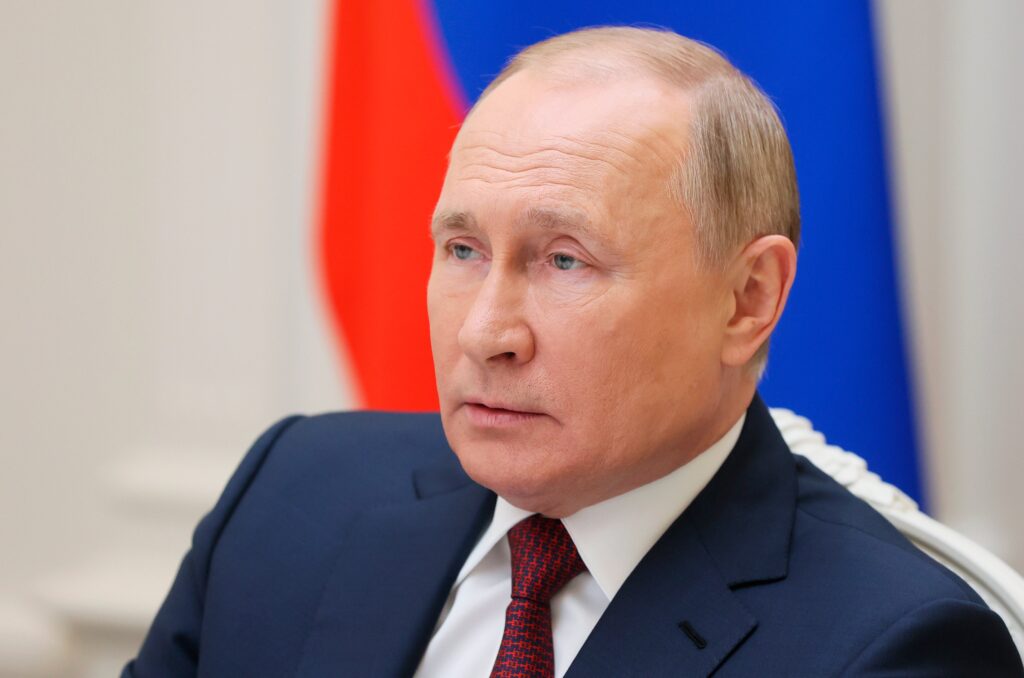
Russian President, Vladimir Putin
Abdullateef Fowewe
Russian President Vladimir Putin has dismissed recent United States interest in acquiring Greenland as anything new, tracing it back to ambitious 19th-century schemes and framing it as a persistent geostrategic play in the warming Arctic.
@dailyeconomy8 Video: ‘These plans have long-standing historical roots,’ Putin revives ghost of 1860s US Greenland grab Russian President Vladimir Putin has dismissed recent United States interest in acquiring Greenland as anything new, tracing it back to ambitious 19th-century schemes and framing it as a persistent geostrategic play in the warming Arctic. In a speech circulating on social media, Putin recounted how “the United States had such plans back in the 1860s of the 19th century,” when the American administration eyed annexing Greenland and Iceland. “Back then American administration considered annexing Greenland and Iceland but this idea did not receive support from Congress at that time,” he said, invoking the era of President Abraham Lincoln. Putin highlighted the era’s skepticism, noting a 1868 press release that mocked President Andrew Johnson’s purchase of Alaska as “a mad icebox and a white bear garden.” Today, he added wryly, “Greenland’s proposal failed but today it is an acquisition. I mean acquisition of Alaska. It is probably evaluated in the United States as something completely different.” The Russian leader detailed a century of US maneuvers: a thwarted 1910 three-way territory swap with Germany and Denmark that would have handed Greenland to Washington; World War II military bases to thwart Nazi capture; and postwar offers to buy the island from Denmark—echoing Harry Truman’s 1946 bid of up to $100 million. “These plans have long-standing historical roots and it is obvious that The US will continue to promote its geostrategic, military political and economic interests in Arctic,” Putin concluded, linking it to President Donald Trump’s fresh 2026 push.
In a speech circulating on social media, Putin recounted how “the United States had such plans back in the 1860s of the 19th century,” when the American administration eyed annexing Greenland and Iceland.
“Back then American administration considered annexing Greenland and Iceland but this idea did not receive support from Congress at that time,” he said, invoking the era of President Abraham Lincoln.
Putin highlighted the era’s skepticism, noting a 1868 press release that mocked President Andrew Johnson’s purchase of Alaska as “a mad icebox and a white bear garden.”
Today, he added wryly, “Greenland’s proposal failed but today it is an acquisition. I mean acquisition of Alaska. It is probably evaluated in the United States as something completely different.”
The Russian leader detailed a century of US maneuvers: a thwarted 1910 three-way territory swap with Germany and Denmark that would have handed Greenland to Washington; World War II military bases to thwart Nazi capture; and postwar offers to buy the island from Denmark—echoing Harry Truman’s 1946 bid of up to $100 million.
“These plans have long-standing historical roots and it is obvious that The US will continue to promote its geostrategic, military political and economic interests in Arctic,” Putin concluded, linking it to President Donald Trump’s fresh 2026 push.
The remarks spotlight escalating Arctic rivalries, where melting ice has unlocked trillions in rare earth minerals and new shipping lanes, according to U.S. Geological Survey data. With the US, Russia, and China jockeying for dominance, Putin’s history lesson casts Trump’s overture not as eccentricity, but continuity in a high-stakes frozen frontier.