
Video: Your bank account is safe with or without narration — Tax committee
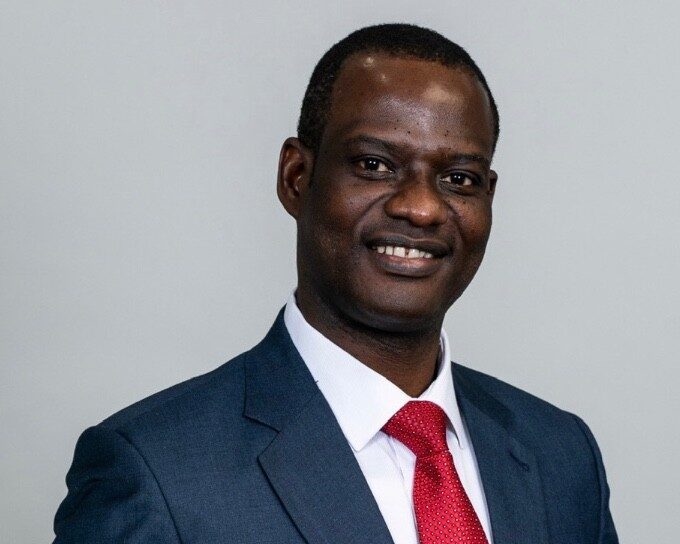
Chairman, Presidential Fiscal Policy and Tax Reforms Committee, Taiwo Oyedele
Abdullateef Fowewe
The Chairman of the Presidential Committee on Fiscal Policy and Tax Reforms, Taiwo Oyedele, has dismissed fears of automatic bank account debits under Nigeria’s new tax laws, assuring citizens that “Your bank account is safe with or without narration.”
Video: Your bank account is safe with or without narration — Tax committee
In an interview with Channels TV on Wednesday, Oyedele explained the strategy behind the reforms, targeting high-yield sources rather than the masses.
“There is no taxman in the world that has the capacity to go after everyone,” he said.
“So therefore, if I have limited capacity, what do I do? I go after the highest yield—where can I get one billionaire, where can I get 100 million there.”
He highlighted irony in the backlash, noting that “people are fighting us most and they don’t even have 1 million in their bank account.” Citing data, Oyedele referenced reports that “98% of bank account holders in Nigeria can’t boast of 500k in their bank account,” while wealthy influencers manipulate narratives.
“There are content creators who admitted they make up to $10,000 a month. They don’t want to pay tax. They say ‘they’re going to debit your bank account’ so the poor can help them fight. Debit 5,000 naira—we could have them fight the reform.”
Oyedele clarified the process affirming, no debits occur on transfers, regardless of amount or description.
“Nobody will debit your account any amount of money you transfer, whether it’s 1 billion or whether it’s 1,000,” he stated.
Instead, taxpayers self-report income annually, with exemptions for those who qualify.
“At the end of the year, you tell the government yourself: you know the amount that is your income. If you are exempted, you don’t need to pay any tax—just say ‘this is my income and I’m exempt from tax.’”
Oyedele stressed that the reforms introduce a progressive system, replacing regressive taxes on the poor.
For small businesses with annual turnover of ₦12 million or less, a presumptive tax regime offers exemptions.
Specific low-margin trades—like vulcanizers and roadside corn roasters—are explicitly shielded.
“Those ones are listed specifically. What we’re planning to do is for them to get a tax exemption sticker so nobody will bother them,” Oyedele said.
Subnational adoption is accelerating, with states like Ekiti, Zamfara, Anambra, Kano, and others enacting harmonised tax laws swiftly.
“Lagos has pledged support,” he noted.
Oyedele lamented the lack of voice for the vulnerable, “We haven’t kicked out for them for long until now. Unfortunately, they don’t have the voice on social media to say ‘we like this reform.’”
He vowed to press forward, emphasising protections for those “usually not at the table when people are formulating policies.”
The new tax laws will commence on January 1, 2026.
Dailyeconomy had earlier reported that President Bola Tinubu affirmed that Nigeria’s sweeping tax reforms, including key provisions set to commence on January 1, 2026, will proceed without delay despite public concerns.
Tinubu in a statement he personally signed on Tuesday, addressed rumours of potential changes to the laws, which partially took effect on June 26, 2025, emphasising the reforms’ role in modernising the nation’s fiscal system.
“These reforms are a once-in-a-generation opportunity to build a fair, competitive, and robust fiscal foundation for our country,” Tinubu stated.
He clarified that the laws aim not to increase taxes but to achieve a “structural reset, drive harmonisation, and protect dignity while strengthening the social contract.”
The President urged stakeholders to back the implementation phase, now in its “delivery stage,” and dismissed disruptions.
“No substantial issue has been established that warrants a disruption of the reform process,” he noted.