

CBN, NNPC sign MoU to boost forex inflows, energy sector coordination
Abdullateef Fowewe
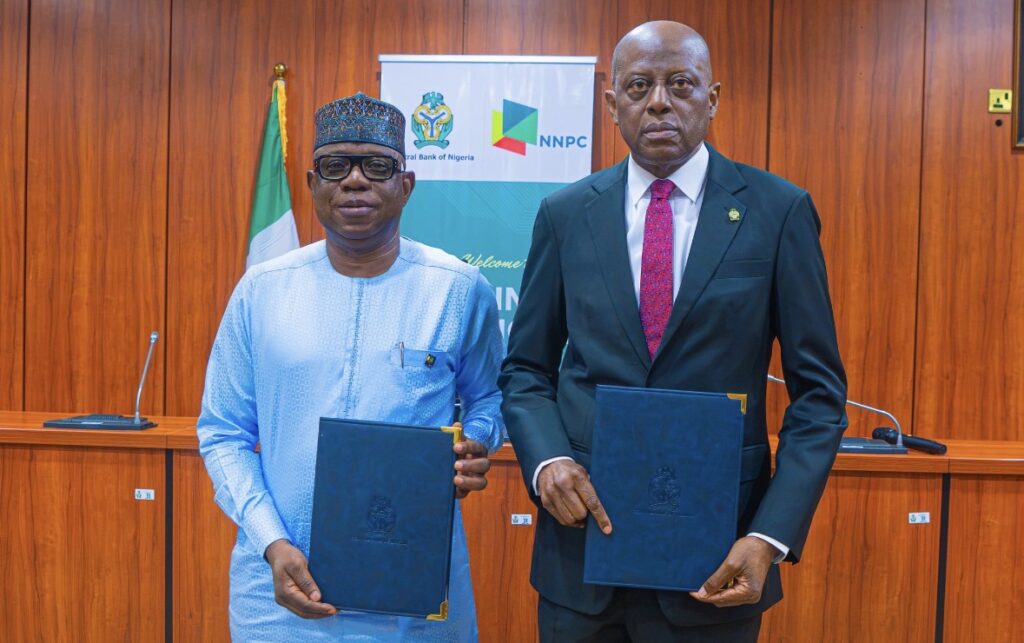
The Central Bank of Nigeria (CBN) and the Nigerian National Petroleum Company Limited (NNPCL) have signed a Memorandum of Understanding (MoU) on Wednesday, at the CBN headquarters in Abuja.
The agreement according to a statement obtained from the apex bank aims to strengthen coordination on energy-sector development, foreign exchange flows, and macroeconomic stability.
CBN Governor Olayemi Cardoso and NNPC Group Chief Executive Officer Bayo Ojulari formalised the deal.
According to the CBN’s official announcement, the MoU “formalises decades of collaboration and provides a structured framework to strengthen coordination, macroeconomic stability and sustainable prosperity.”
Cardoso emphasised the role of joint mechanisms, “Regular engagements through the Joint Steering Committee and the Joint Working Committee would enable the CBN and NNPC Limited to better align their actions, pursue shared objectives, and support efforts to position Nigeria’s energy assets for global competitiveness.”
He added that the CBN is positioned “to exercise its convening power to attract global institutions and financial structures that could help develop Nigeria’s vast natural gas resources, mobilise capital and support the sustainable development of the oil and gas sector.”
Continued collaboration on account management, funds transfers, and liquidity support, he said, “would contribute directly to macroeconomic stability by supporting fiscal revenues and ensuring predictable inflows into the foreign exchange market.”
Nigeria’s economy remains heavily dependent on oil and gas for foreign exchange earnings and government revenue.
The CBN acts as custodian of key NNPC operational foreign currency accounts, playing a central role in the timely settlement of oil and gas proceeds into the Federation Account and other government accounts.
Past cooperation between the two institutions has often been ad hoc.
The new MoU seeks to replace that approach with structured oversight, payment automation, regulatory alignment, cybersecurity measures, and information sharing. It also supports efforts to attract investment aimed at raising crude oil production from around 1.8 million barrels per day toward a target of three million barrels per day, while unlocking natural gas resources.
The agreement comes amid broader economic reforms under the administration of President Bola Tinubu that have sought greater transparency in the oil sector and improved visibility for the CBN over revenue flows.
Recall that Nigeria’s gross external reserves recently exceeded $55 billion, supported by higher oil production and remittances, though the country continues to manage currency stability and FX supply pressures.