
Experts urge swift state policing reform at UI roundtable, warn of security drift
Abdullateef Fowewe
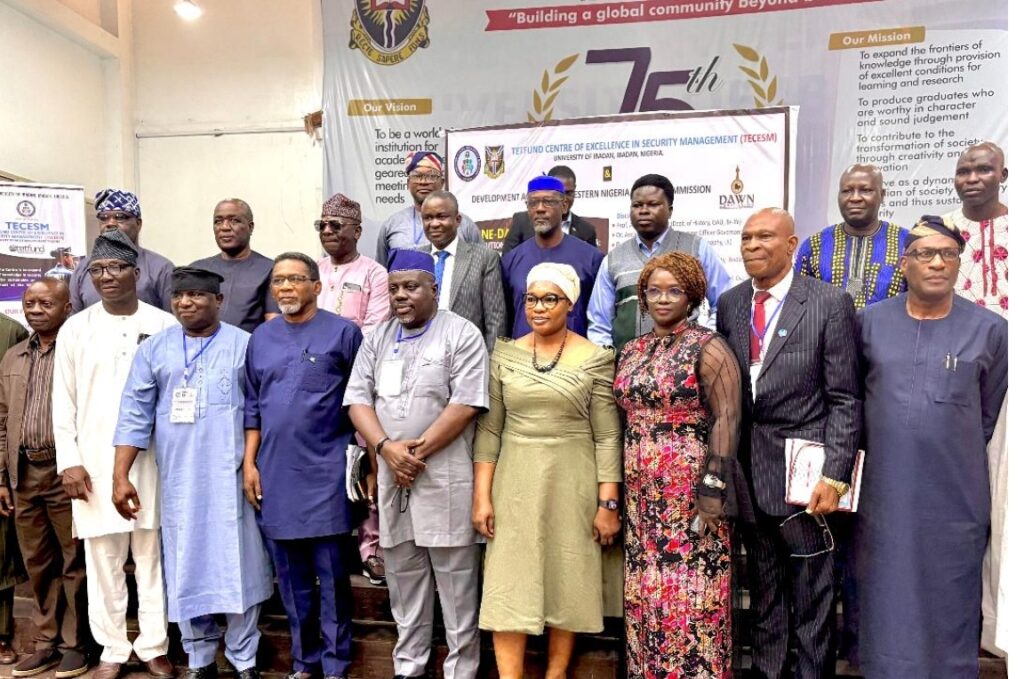
Amid rising fears of insecurity creeping into the South-West, experts gathered at the University of Ibadan on Wednesday for a one-day roundtable on constitutional state policing, calling for urgent action to reshape Nigeria’s security architecture before threats overwhelm the region.
Coordinated by Professor Benjamin Aluko, Director of the TETFund Centre of Excellence in Security Management at UI, and Dr Seye Oyeleye, Director General of the Development Agenda for Western Nigeria (DAWN) Commission, the event drew legal luminaries, retired police chiefs, and scholars.
They dissected opportunities, pitfalls, and a roadmap for implementation, stressing that half-hearted reform could spell disaster for democracy.
Professor Aluko set the tone, stressing the stakes, “We’re here to generate ideas on implementing constitutional state policing right. If mishandled, it could threaten our democracy, peace, and stability. We’ll send our findings to South-West governors for action.”
Chairman/CEO Mothergold Limited & Mothergold Consulting, Dr Adesina Fagbenro-Byron, while speaking, framed it as a test of state legitimacy and citizen trust.
“This is about protecting lives, liberties, and property – government’s sacred duty,” he said, painting a grim picture of evolving threats: terrorism, insurgency, banditry, industrial-scale kidnapping, and cybercrimes spreading southwards.
“The South-West can’t pretend it’s immune anymore. State policing isn’t optional; it’s a national imperative,” he added.
He warned against “decentralising dysfunction,” urging lessons from the Nigeria Police Force’s woes: distant ownership breeds intelligence gaps; poor management – from recruitment to welfare – fuels failure; and unchecked control invites abuse.
Fagbenro-Byron proposed a layered framework, “Legal foundations: Constitutional amendments, state laws, funding, and anti-politicisation safeguards like independent commissions.
“Operational muscle: Training, tech, forensics, and intelligence-led policing.
“Public trust: Community engagement and inter-ethnic protections.”
Challenging the Inspector General Police’s 60-month timeline as too slow for rampaging threats, he pushed for a 12-month rollout: amend the constitution, set up commissions, train pioneers, and pilot in ready states like the South-West.
“Reform delayed amid escalating threats is risk compounded,” he noted, invoking his late mother’s wisdom, “Tis better to get to heaven before the devil knows you’re dead.”
Former Commissioner for Justice and Attorney General, Oyo State, Barrister Mutalubi Adebayo, SAN, in his remark reminisced about Nigeria’s federal past with native authority and border police, scrapped under military rule.
He nodded to President Tinubu’s support but stressed collaboration with federal police, lamenting lost opportunities.
Former CP Lagos State & Former Security Adviser, Oyo State Governor, CP Fatai Owoseni (rtd), defended police commissioners’ discretionary powers under the constitution.
“I served in Lagos and Benue without running to Abuja. No CP wants chaos in their state,” he said, blaming underfunding and a dormant Police Council – meant to include governors – for current woes.
He cited Amotekun and neglected special constabularies (Community Police) as half-steps, warning multi-ethnic tensions could derail state police without fixes.
Professor I.O. Albert, UI’s peace studies pioneer, humanised the debate noting, “Police are victims of the system too. The problem isn’t just them.”
AIG Adeoye Olafimihan (rtd) summed up unity: “The police are the people, and the people are the police. They must unite for community safety.”