

Kane lead star-studded 2026 Ballon d’Or shortlist as France Football unveils 30 nominees
Abdullateef Fowewe
France Football has announced the 30-player shortlist for the 2026 Men’s Ballon d’Or, with Bayern Munich striker Harry Kane emerging as the clear early favourite after a record-breaking season.
The official list, revealed on Tuesday via the Ballon d’Or account, features a mix of established superstars and rising talents.
Nominees include Lionel Messi (seeking a record-extending ninth award), Kylian Mbappé, Erling Haaland, Vinícius Jr., Jude Bellingham, Bruno Fernandes, Lamine Yamal, and Ousmane Dembélé (the defending champion from 2025).
Spain, fresh off winning the 2026 World Cup, is strongly represented with six players, among them Yamal, Rodri, Pau Cubarsí, and others.
The full shortlist is: Jude Bellingham, Pau Cubarsí, Marc Cucurella, Ousmane Dembélé, Luis Díaz, Bruno Fernandes, Gabriel, Erling Haaland, Achraf Hakimi, Harry Kane, Khvicha Kvaratskhelia, Lamine Yamal, Sadio Mané, Marquinhos, Lautaro Martínez, Kylian Mbappé, Nuno Mendes, Lionel Messi, João Neves, Michael Olise, Willian Pacho, Julián Quiñones, Declan Rice, Rodri, Fabián Ruiz, William Saliba, Ferran Torres, Dayot Upamecano, Vinícius Jr., and Vitinha.
Kane’s inclusion follows an extraordinary campaign in which he scored 73 goals for club and country—helping Bayern Munich secure domestic honours and guiding England to a World Cup semi-final (or third place, depending on final classification). Bookmakers have installed him as the odds-on favourite, with Yamal, Mbappé, and others also in contention.
Notably absent is Cristiano Ronaldo.
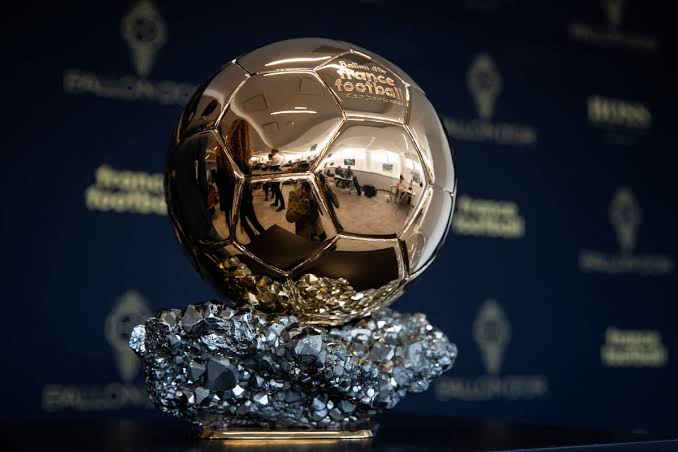
The Ballon d’Or, created by France Football in 1956, remains football’s most prestigious individual honour.
It is decided by a panel of international journalists and rewards performances across the previous season (this year covering the 2025/26 club campaign and the 2026 World Cup). The 70th edition of the award will be presented at a ceremony in London on 26 October—the first time the gala has been held outside Paris—in tribute to Sir Stanley Matthews, the inaugural winner in 1956.