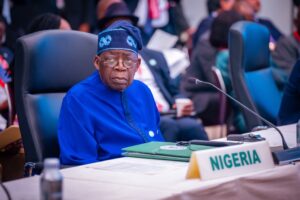

Nigeria calls for affordable capital to fund Africa’s infrastructure at UN Climate Dialogue
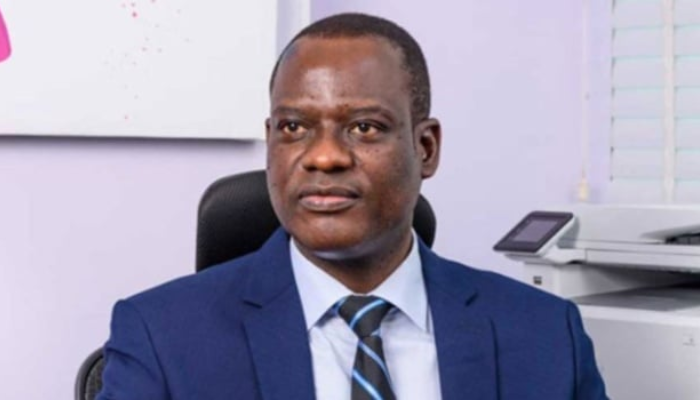
Minister of Finance and Coordinating Minister of the Economy Federal Republic of Nigeria, Taiwo Oyedele
Abdullateef Fowewe
Nigeria’s Minister of Finance and Coordinating Minister of the Economy, Taiwo Oyedele, has urged the international community to increase the availability of affordable capital to finance infrastructure and development across Africa.
Speaking at the United Nations Dialogue on Solutions to Climate Finance on the margins of the 81st Session of the United Nations General Assembly in New York, Oyedele said Africa’s development ambitions—particularly its energy needs remain constrained by high financing costs, currency risks, and limited access to affordable long-term capital.
“Despite Africa’s relatively low contribution to global carbon emissions, the continent continues to face what he described as a ‘prejudice premium’ and ‘narrative cost’ in its efforts to mobilise financing for critical infrastructure,” the Federal Ministry of Finance said in a press release issued in Abuja on Wednesday.
He also identified currency risk and a “stereotype tax” as additional burdens confronting African countries seeking capital for energy and other development assets.
Oyedele called for a strategic shift in climate finance approaches, with simpler access to affordable capital for developing countries and financing arrangements that better reflect their development realities.
He urged greater international investment in gas and other transition energy sources in Africa to expand access to reliable and affordable energy, address energy poverty, diversify global energy supply, and reduce concentration risks amid disruptions affecting the Gulf region.
“The Minister stressed that Africa’s energy transition must take account of the continent’s significant energy-access deficit, noting the need for greater investment to enable countries to meet their development needs while pursuing a practical transition to cleaner energy sources,” the statement added.
For Nigeria, Oyedele said the immediate priority is to structure and implement policies and programmes that reduce poverty, expand economic opportunities, and accelerate shared prosperity.
Achieving these goals, he noted, would require stronger international cooperation and a financing framework that enables developing countries to mobilise the capital needed for infrastructure.
Taiwo Oyedele, an economist, accountant, and public policy expert, has served as Nigeria’s Minister of Finance and Coordinating Minister of the Economy since 21 April 2026, when President Bola Tinubu appointed him in a cabinet reshuffle to succeed Wale Edun.
He previously chaired the Presidential Committee on Fiscal Policy and Tax Reforms and briefly served as Minister of State for Finance.
A former Africa Tax Leader at PricewaterhouseCoopers, Oyedele has been central to Nigeria’s recent tax and fiscal reform efforts.
The concept of a “prejudice premium”—higher borrowing costs for African countries driven by risk perceptions that often exceed actual default rates has been highlighted by institutions such as the Africa Finance Corporation, which has estimated the annual cost at around $75 billion. Africa contributes a small share of global greenhouse gas emissions yet faces a large infrastructure financing gap and significant energy access challenges, with hundreds of millions of people lacking reliable electricity.
The UN Dialogue forms part of broader climate action discussions during High-Level Week of the 81st UN General Assembly, focused on scaling climate finance, improving coordination among multilateral development banks and other funders, and supporting developing countries’ transition and development priorities.