
Saving the Citadel: Why King’s College, Lagos needs the old boys — Now
Kings College Lagos
Report by ISA AbdulMumin
A crumbling heritage, a bold rescue plan, and the fight to decide who saves a national treasure:
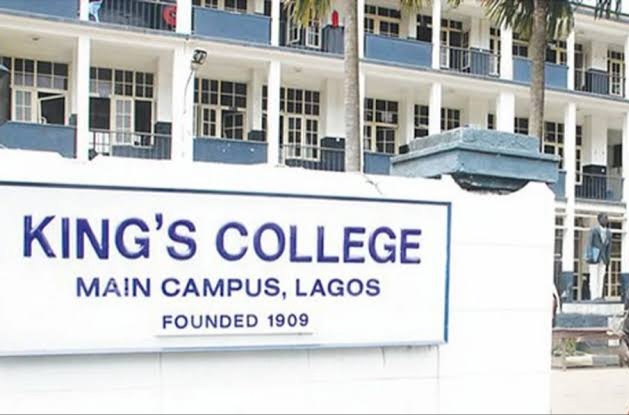
On Kings College Road, Lagos Island, a wrought-iron gate still bears the crest of an institution that once stood as the gold standard of secondary education in colonial and post-colonial Nigeria. Founded in 1909 by the colonial government, King’s College, Lagos (KCL) was built to produce an elite corps of administrators, professionals and leaders for a nation still decades from independence. It succeeded spectacularly. Its alumni roll reads like a who’s-who of Nigerian public life: the nonagenarian elder statesman Alhaji Femi Okunnu, the Emir of Kano Sanusi Lamido Sanusi (Muhammadu Sanusi II), Kashim Ibrahim-Imam, and the internationally celebrated financier Adebayo Ogunlesi, among a long line of judges, military generals, professors and captains of industry.
Walk through the same campus today, however, and the contrast is jarring. More than a century of history sits inside buildings whose roofs leak, hostels whose plumbing has failed, laboratories in darkness and stripped of functioning equipment, and toilet blocks so degraded that students and staff describe them as unfit for use. It is this gap between what King’s College once was and what it has become that has pushed the school’s Old Boys’ Association (KCOBA) into a controversial but, its defenders argue, necessary decision into a 35-year concession agreement with the Federal Government to rebuild and professionally manage the institution.
For years, alumni visiting their alma mater have returned with the same grim report. Hostel blocks meant to house boarding students now have collapsed ceilings, broken windows, and sanitary facilities long since abandoned by any standard of hygiene. Science laboratories that once helped produce engineers and medical doctors have been reduced to empty shells, lacking the basic apparatus needed to teach a modern curriculum. Classrooms and dormitories built for a different era have not seen meaningful renovation in decades, even as government subventions to unity schools are grossly inadequate.
Beyond crumbling walls, a deeper rot has set in. Old boys and genuinely concerned parents have raised alarms over widespread indiscipline on campus, including allegations that parts of the school have effectively become havens for drug abuse among students which is a devastating reversal for an institution once synonymous with rigorous character formation. Compounding the loss of order, a portion of the school’s Victoria Island annex, land that belongs to King’s College, is now reportedly being used as a public car park, exposing students to traffic, strangers and security risks on land meant exclusively for their education.
Perhaps most corrosive of all is what many old students describe as the quiet commercialisation of admission slots. As placements in a federal unity college, meant to be won on merit through the National Common Entrance Examination, allegedly changing hands informally in exchange for money or connections. For an institution whose entire founding purpose was to identify and nurture talent regardless of background, this is arguably the gravest betrayal of its mission.
Against this backdrop, KCOBA’s leadership has argued that appeals to government alone have not worked. Federal capital allocations to Nigeria’s more than one hundred unity colleges are spread thin, and King’s College, despite its prestige, has not been spared the underfunding that afflicts public secondary education broadly. The Old Boys’ Association, made up of men who have gone on to lead banks, courts, corporations and government ministries, concluded that if the school’s fortunes were to change within their lifetimes, they would have to bring their own resources and management expertise to the task.
The arrangement, formalised after months of negotiation and finally announced with a federal handover letter in September, is structured as a public-private partnership rather than a sale. The Ministry of Education has been explicit on this point: the Federal Government retains legal ownership of King’s College and continues to exercise regulatory, inspection and enforcement oversight. What changes is who runs day-to-day operations. Under the deal, KCOBA takes on responsibility for financing the rehabilitation of classrooms, hostels, laboratories and other facilities, and for operating and maintaining the school going forward, for a period of 35 years.
The Ministry has also sought to reassure sceptics on specific points of concern. Admission into JSS1 will continue to run through the existing Unity Schools process, anchored on the National Common Entrance Examination, rather than any parallel channel controlled by the old boys. School fees, officials say, will not be automatically increased because of the concession, though there is no permanent freeze written into the deal. Teachers who choose to remain at the school have reportedly been promised a doubling of salaries and allowances, while those unwilling to work under the new arrangement retain their status as federal civil servants and can be redeployed elsewhere in the ministry. The Old Boys’ Association says it intends to run the school on a non-profit basis, with government monitoring compliance.
None of this has stopped a genuine and vocal backlash. Workers under the Joint Congress of Unions of the Federal Ministry of Education shut down the ministry’s Abuja headquarters and, for a period, kept unity colleges across the country closed in solidarity, fearing the King’s College arrangement could become a template for privatising other federal schools. Parent-Teacher Associations at King’s College and sister institutions like Queen’s College have voiced fears that private management, however well-intentioned, erodes the character of a public institution and could eventually make school fees unaffordable for ordinary families. Some have gone as far as threatening legal action, insisting the school belongs to the Nigerian public and should be reformed, not concessioned to a private body, however illustrious its membership.
These are not frivolous objections. A 35-year commitment is a long horizon over which circumstances, leadership and priorities within KCOBA itself could change, and there is legitimate value in asking what happens to accountability, worker rights and future fee structures over such a span. Nigeria’s history with concession and privatisation arrangements in other public sectors like power distribution and ports among others has not always inspired confidence, and critics are right to demand that whatever contract has been signed be made fully public and independently monitored.
Yet set against decades of visible, undeniable decay, the essential question opponents must answer is simple: what is the alternative, and how soon would it arrive? Federal budgets have not rescued King’s College’s hostels, laboratories or toilets in a generation. Waiting for the next appropriation cycle, or the next minister, has not worked. The Old Boys’ Association is offering something the treasury has no immediate capital, technical expertise drawn from men who have built and managed major institutions, and a personal, almost filial stake in the outcome that a rotating bureaucracy simply cannot replicate. These are not outsiders seeking to strip an asset; they are graduates whose own formation the school shaped, now proposing to reinvest in it.
Crucially, the safeguards that matter most to critics such as continued government ownership, merit-based admissions through the national common entrance examination, job security for existing staff, and no automatic fee hikes are already written into the framework the Ministry has described. What remains is to hold both government and KCOBA to those commitments through transparent, published terms and active, independent oversight, rather than to reject wholesale a plan that finally offers King’s College a credible path out of its physical and moral decline.
A century-old citadel of Nigerian excellence is at stake. The debate over how to save it is legitimate and necessary. But the case for giving King’s College’s own sons the chance to rebuild what they inherited in ruins deserves the public’s understanding and support.
Dr. ISA of apex media services