
Tinubu calls for UN Security Council reform, two permanent African seats
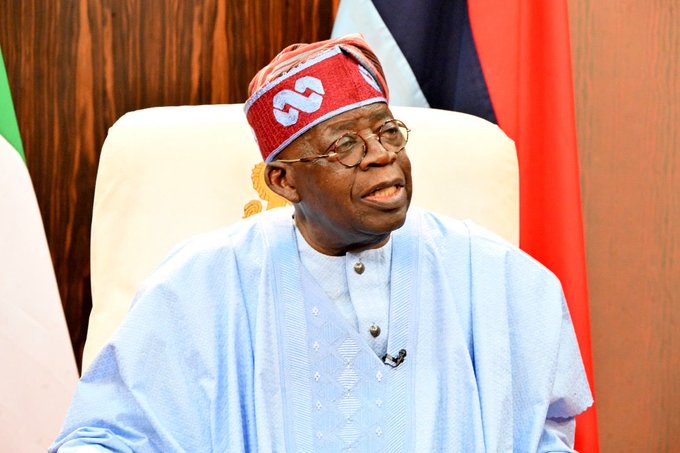
President Bola Tinubu
Nike Popoola
President Bola Ahmed Tinubu has called for urgent reform of the United Nations Security Council, demanding at least two permanent seats for Africa with full rights and responsibilities, including veto powers for as long as the veto exists.
Tinubu made the call in a national statement delivered by Vice President Kashim Shettima at the General Debate of the 81st United Nations General Assembly (UNGA).
The President said the current global power structure, established in 1945, no longer reflects the realities of the world in 2026, stressing the need for a more representative and inclusive international system.
Nigeria also demanded five non-permanent seats for Africa, in line with the Ezulwini Consensus and Sirte Declaration.
Tinubu reaffirmed Nigeria’s commitment to multilateralism, maintaining that diplomacy, international cooperation and respect for international law must take precedence over coercion, isolation and the arbitrary use of power.
He further expressed Nigeria’s readiness to assume greater responsibility in global affairs, citing the country’s decades of peacekeeping, mediation and security interventions across Africa, including Liberia, Sierra Leone, Darfur, Mali and The Gambia.
Economic Reforms, Climate Action
The President linked Nigeria’s foreign policy priorities to its domestic economic reforms, identifying sound macroeconomic management, stronger institutions, strategic investment and private-sector development as essential to sustainable economic growth.
On climate change, Tinubu rejected what he described as a false choice between development and climate action, arguing that developing countries should be allowed to industrialise, reduce poverty and expand energy access while pursuing lower-carbon growth.
He called for predictable climate finance, technology transfer and capacity building, stressing that climate responsibility should be guided by equity and shared responsibility rather than charity.
Nigeria, he said, remained committed to its Energy Transition Plan and net-zero target for 2060. The country’s approach combines renewable energy, clean cooking, gas as a transition fuel, climate-smart agriculture and nature-based solutions.
Tinubu Advocates AI, Digital Infrastructure Investments.
On technology, President Tinubu urged the international community not to surrender the future of Artificial Intelligence (AI) to fear, advocating its use in transforming healthcare, education, agriculture, governance and economic productivity.
He invited global partners to collaborate with Nigeria’s youthful population in technology and innovation, while encouraging investments in digital public infrastructure, broadband, research and technology entrepreneurship.
Tinubu also called for radical reform of the international financial architecture, wider access to concessional financing and debt frameworks that would enable developing countries to invest in education, healthcare and infrastructure.
Nigeria Promotes AfCFTA, Security Cooperation
The President identified the African Continental Free Trade Area (AfCFTA) as a major driver of Africa’s transformation, urging countries across the continent to move beyond raw-material exports towards value addition, manufacturing, innovation and knowledge-driven growth.
On security, Nigeria advocated stronger intelligence sharing, tighter controls on terrorist financing and illicit arms flows.
Tinubu stressed that military victories must be reinforced through education, economic opportunities, accountable governance and social inclusion to address the underlying drivers of insecurity.
He further called for urgent diplomatic action in Sudan and other conflict zones, with emphasis on protecting civilians, guaranteeing humanitarian access and upholding international law.
The President reaffirmed Nigeria’s commitment to cooperation over confrontation, dialogue over division and partnership over isolation.
He declared that a reformed, inclusive and effective United Nations remains indispensable to global peace, justice and sustainable development.