
Tinubu tasks energy commission on local biofuel production

Abdullateef Fowewe
President Bola Tinubu has directed the Energy Commission of Nigeria (ECN) to accelerate the development of Nigeria’s bioenergy industry, as part of efforts to reduce the country’s dependence on petrol and diesel, lower energy costs and create jobs.
The President issued the charge after Nigeria was admitted as a Partner Country of the Global Bioenergy Partnership (GBEP), an initiative hosted by the Food and Agriculture Organisation of the United Nations.
Nigeria’s admission was confirmed on November 5 in Rome, Italy, following the Federal Executive Council’s approval of the Strategic Plan of the Nigeria Bioenergy Partnership.
In a statement released on Saturday by the Special Adviser to the President on Information and Strategy, Bayo Onanuga, Tinubu said Nigeria should convert its agricultural resources into commercially viable fuels.
“Developing a domestic biofuel industry will open new markets for Nigerian farmers, create employment opportunities and stimulate manufacturing, particularly in rural communities,” the President said.
He added, “I expect the Commission to translate Nigeria’s membership of the Partnership into investments, new industries and more affordable energy for Nigerians.”
The directive builds on the administration’s energy-diversification measures since 2023, including the Presidential Initiative on Compressed Natural Gas, whose mandate was expanded to cover electric vehicles, and the establishment of the Presidential Committee on Green Economic Initiatives.
Tinubu said that, with Nigeria’s vast agricultural resources, the country had no reason to overlook the economic value of turning agricultural waste and other organic materials into fuels.
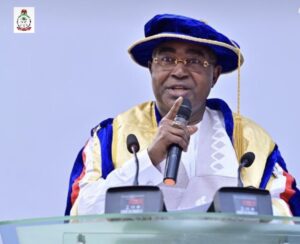
The President commended the Director-General of the Energy Commission, Dr Mustapha Abdullahi, and his team for securing Nigeria’s admission into the partnership and advancing the Federal Government’s energy diversification policy.
He urged the Commission to work with the private sector to establish biofuel production facilities across the country, while ensuring that the drive does not compromise national food security.
Nigeria’s participation in GBEP is expected to support investment in biofuels and related clean-energy industries, as the government seeks alternative energy sources to reduce costs and expand employment.