

Video: Iran can sustain missile fire for years — IRGC
Abdullateef Fowewe
Iran’s Islamic Revolutionary Guard Corps (IRGC) has claimed it is producing more ballistic missiles and drones each day than it is launching, and could sustain rocket attacks for years if the current conflict continues.
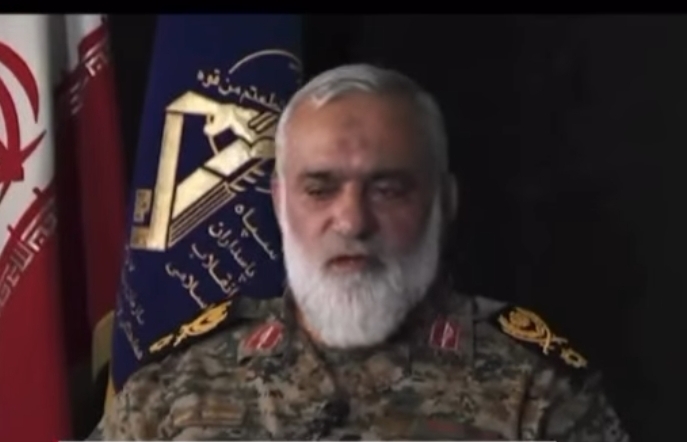
In an interview with PBS NewsHour’s Reza Sayah in Tehran, Brig. Gen. Mohammad Reza Naqdi, senior adviser to the IRGC commander-in-chief, framed Iran’s war strategy around endurance and attrition rather than quick victory.
“The number of missiles we manufacture every day is more than the number we launch,” Naqdi said, adding that Iran’s drone output also exceeds deployment rates.
“Even if the war lasts for several years, our ballistic missiles will continue to rain down on the enemy,” he said, suggesting Tehran can maintain strikes “until the last day.”
Naqdi argued that prolonging the conflict could itself become a deterrent.
“One way is to prolong this war until we get to the next term of the presidency and cause attrition, so that if anyone else wants to attack Iran, they will know there is a cost,” he told PBS.
He emphasised that Iran’s missile and drone programs rely on dispersed, domestic manufacturing, making them harder to cripple with strikes and allowing continued output despite a smaller military budget than the U.S. and Israel.
Naqdi warned that if missile stocks were ever constrained, Iran could shift focus to targeting U.S. global economic interests, signaling a potential expansion of the conflict beyond direct military sites.
The remarks come amid an ongoing conflict that began in late February 2026, after heightened tensions over Iran’s weapons programs and regional activities.
U.S. and Israeli strikes reportedly degraded parts of Iran’s missile and drone infrastructure, but intelligence assessments since then have indicated a faster-than-expected recovery, with production lines restarting and some capabilities restored within months.
Naqdi used the interview to claim that Washington’s stated objectives—toppling Iran’s leadership and breaking up the country had failed, and that Iran had emerged “stronger” from five months of fighting.
He also said Iranian officials now see the U.S. military as “weaker than what we perceived,” based on lessons learned during the war.
Naqdi’s statements reinforce Tehran’s narrative of strategic patience and long-term resistance, positioning Iran as capable of outlasting adversaries even under sustained pressure.