
Atiku tackles Tinubu over fuel policy, demands accountability
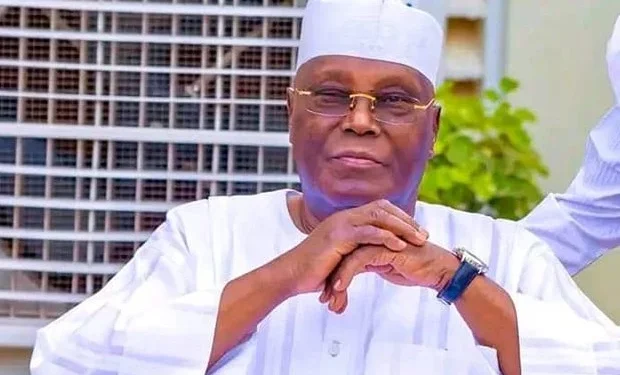
Atiku Abubakar
Abdullateef Fowewe
Phrank Shaibu, Senior Special Assistant on Public Communication to former Vice President Atiku Abubakar, has accused President Bola Tinubu of attacking Atiku’s economic proposals while allegedly failing to address the worsening cost-of-living crisis in the country.
Shaibu, in a statement on Tuesday, said President Tinubu’s latest post on X criticised Atiku’s position on fuel pricing and economic relief without directly mentioning the African Democratic Congress, ADC, presidential candidate.
“Bola, Nigerians know exactly whose policy you were attacking.
“You were responding to Atiku Abubakar because he has chosen to stand with millions of Nigerians being crushed by the cost-of-living crisis,” Shaibu said.
He said Atiku’s position was that petrol should not be treated as a luxury in an oil-producing country, arguing that economic policies should be measured by whether Nigerians can afford transportation, food, education, healthcare and other necessities.
The statement comes amid a sustained public dispute between the Presidency and Atiku’s camp over his proposed Atiku Economic Recovery Plan, AERP, which proposes a targeted, capped and independently audited support mechanism tied to domestic refining rather than a return to the former import-based petrol subsidy regime.
Shaibu faulted Tinubu’s promise of cheaper transportation, increased food production and relief for vulnerable Nigerians, questioning why such interventions were being announced after years of economic pressure on households.
“Why did Nigerians have to suffer for more than three years before your government discovered that economic growth must reach ‘the dining table and the pocket’?” he asked.
“You cannot condemn cheaper living when Atiku proposes it and rename the same objective Renewed Hope when you promise it. That is not economic consistency. It is political convenience,” he added.
The Atiku aide compared Nigeria’s petrol price with prices in other oil-producing countries, maintaining that Nigerians were paying disproportionately high prices despite lower incomes and the country’s crude oil resources.
He said a worker on the ₦70,000 minimum wage would spend ₦56,000 — about 80 per cent of monthly earnings to buy 40 litres of petrol at ₦1,400 per litre.
“That is the human face missing from your economic argument,” Shaibu said, adding that costly fuel had increased transportation and food prices across the country.
He cited the example of a tomato trader, noting that rising energy and transport expenses were passed through the value chain from farmers to transporters, wholesalers, retailers and ultimately consumers.
“Reduce fuel costs and you reduce pressure on transportation. Reduce transportation costs and you reduce the cost of moving tomatoes, rice, yam, livestock and manufactured goods,” Shaibu said.
According to him, the AERP would provide support for Nigerian crude supplied to domestic refineries under a “capped, transparently budgeted and independently audited framework,” with safeguards intended to ensure consumers benefit at fuel stations.
Atiku’s camp has previously said the proposal would track subsidised crude from allocation through refining and product delivery, with a defined fiscal ceiling.
Shaibu also rejected claims that the proposed intervention could undermine the Nigerian Education Loan Fund, NELFUND, workers’ salaries or the minimum wage, describing the argument as “fearmongering dressed up as economics.”
He criticised the student-loan programme as inadequate where school fees and the underlying cost of education remained beyond the reach of ordinary households.
“A student loan is not a scholarship. It is a liability.
“Education should open doors, not mortgage the future,” he said.
Shaibu demanded that the Federal Government provide detailed accounts of the revenue it said had been mobilised from petrol subsidy removal, as well as explanations on Federation Account figures and import duty exemptions.
“We have also repeatedly demanded a comprehensive reconciliation of the nearly ₦30 trillion identified across Federation Account revenues, deductions, savings, transfers and related entries,” he said.
He added that Nigerians deserved “full transparency” on import duty exemption certificates reportedly covering about ₦34 trillion worth of imports, including the beneficiaries, legal basis and public value of the incentives.
Shaibu said the Federal Government’s proposed relief measures risked being viewed as election-driven, alleging that they came after prolonged hardship.
“After more than three years of hardship, Nigerians are now being offered a temporary dose of political anaesthesia as 2027 approaches,” he said.
The statement reflects the escalating political and policy exchanges around petrol subsidy removal, domestic refining and the affordability of fuel ahead of the 2027 elections.
The Presidency has previously challenged Atiku’s subsidy position, while Atiku’s camp has maintained that its proposal is a targeted domestic-production intervention rather than a restoration of the old open-ended import subsidy structure.