

Beyond capital: Rethinking finance to unlock MSME growth
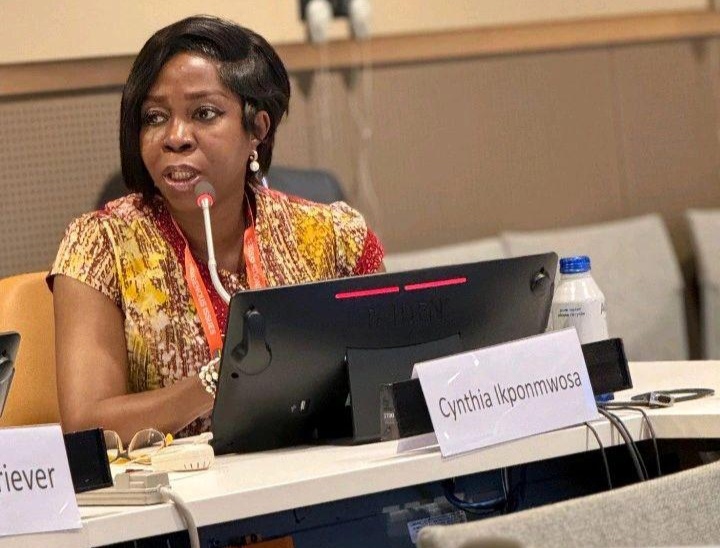
Cynthia Ikponmwosa, Managing Director of LAPO Microfinance Bank
At the heart of global economic development lies a persistent paradox: micro, small, and medium enterprises (MSMEs), widely acknowledged as engines of growth, yet they remain critically underserved by the very financial systems designed to support them.
This contradiction continues to shape global discourse, including at the SDG Investment Fair convened by the United Nations, where policymakers, financial institutions, and development leaders gathered to interrogate one pressing question—why does the MSME financing gap persist despite increasing global capital flows?
At this high-level engagement, Cynthia Ikponmwosa, Managing Director of LAPO Microfinance Bank, joined global leaders including Peter Simon of the World Savings and Retail Banking Institute (WSBI) and European Savings and Retail Banking Group (ESBG), Karolin Schriever of DSGV, and Krishnan Sharma, to explore practical pathways for enhancing access to finance for MSMEs.
The global consensus from the dialogue was clear: the challenge is not simply about capital—it is about systems.
According to the World Bank, MSMEs account for about 90% of businesses and over 50% of employment globally, yet face a staggering $5.7 trillion financing gap in developing economies. In Nigeria, insights from Enhancing Financial Innovation and Access (EFInA) indicate that financial inclusion has reached 74%, but a significant number of MSMEs remain excluded from formal credit systems. The Central Bank of Nigeria similarly underscores persistent barriers such as lack of collateral, limited credit histories, and informality.
These realities point to a deeper structural disconnect.
Many MSMEs operate within informal ecosystems—relying on cash transactions, limited documentation, and non-traditional business structures. Yet, financial institutions continue to apply rigid frameworks that prioritize documentation over potential and standardization over flexibility. The result is systemic exclusion—not due to absence of finance, but misalignment of financial systems with real-world business dynamics.
This is particularly evident in the “missing middle”—a segment of enterprises that have outgrown microfinance but remain too unstructured for commercial banking. These businesses sit at the cusp of growth, capable of scaling operations and creating jobs, yet constrained by lack of appropriate financial instruments.
While financial technology has introduced new opportunities—through mobile banking, digital platforms, and alternative credit scoring—the global conversation acknowledges its limitations. Technology can expand reach, but it cannot replace trust, financial literacy, and human engagement. Without these, access does not translate into meaningful inclusion.
It is within this context that Cynthia Ikponmwosa’s intervention at the SDG Investment Fair becomes particularly instructive.
She emphasized that “sustainable access to finance requires systems that are inclusive, adaptive, and grounded in the realities of the businesses they serve. When we get this right, we do more than improve access to finance; we unlock jobs, resilience, and economic opportunity at scale.”
This perspective reflects the lived experience of institutions like LAPO Microfinance Bank, whose model is built on proximity to customers, community-based engagement, and tailored financial solutions. By integrating financial literacy, group lending structures, and flexible products, LAPO MFB has demonstrated that inclusion is not merely about providing capital—it is about building ecosystems that enable businesses to thrive.
The bank’s contribution aligns with broader global priorities articulated by the United Nations and the World Bank—priorities that recognize financial inclusion as a cornerstone of sustainable development.
Source: LAPO Microfinance Bank