
Cardoso, Oyedele meet IMF, World Bank leaders on Nigeria’s economic growth
Abdullateef Fowewe
Nigeria has moved to deepen engagements with the International Monetary Fund (IMF) and World Bank as it seeks to convert recent macroeconomic stabilisation into investment, stronger financial markets and sustainable growth.
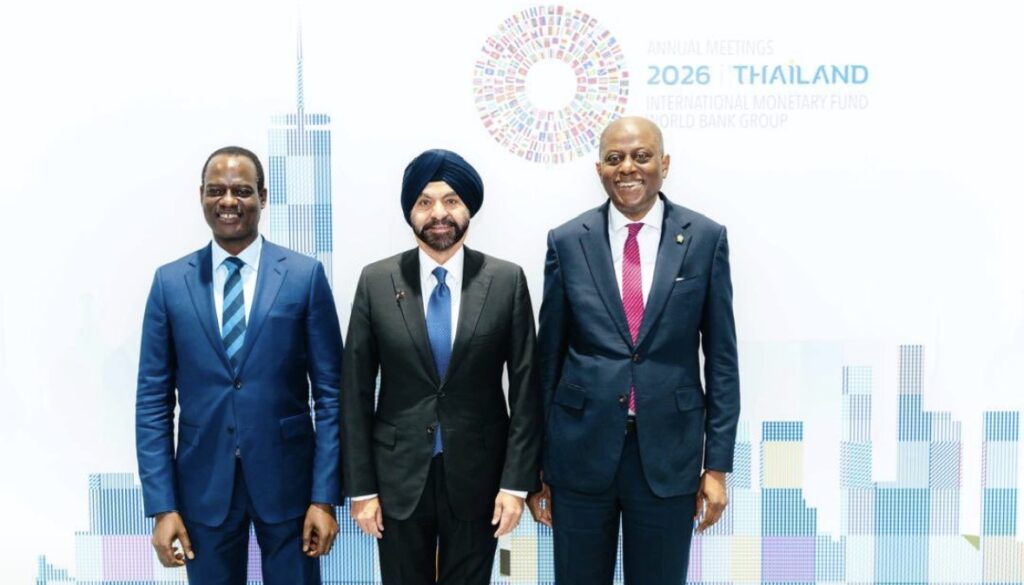
Central Bank of Nigeria (CBN) Governor, Olayemi Cardoso, and Minister of Finance and Coordinating Minister of the Economy, Taiwo Oyedele, held separate bilateral meetings with senior IMF and World Bank officials on Monday at the 2026 IMF–World Bank Annual Meetings in Bangkok, Thailand.
A statement from the CBN on Tuesday said Nigeria was entering “the next phase of its economic agenda: strengthening financial markets, mobilising capital and creating the conditions for sustainable growth.”
It added, “With macroeconomic stabilisation providing a stronger foundation, Nigeria is turning its attention to the next phase of its economic agenda.”
Cardoso and Oyedele met the IMF’s First Deputy Managing Director, Dan Katz, and the President of the World Bank Group, Ajay Banga, on the sidelines of the global gathering.
Talks With World Bank
The meeting with Banga reviewed Nigeria’s reform progress and focused on translating stability into faster growth, private investment and improved domestic revenue generation.
According to the Federal Ministry of Finance, the World Bank president “commended the progress of Nigeria’s reforms.”
The discussions also explored greater use of World Bank guarantee instruments to unlock infrastructure financing and attract private capital into the domestic market.
Power infrastructure and human capital were identified as priority areas for continued public investment because of their importance to business competitiveness, productivity and job creation.
The 2026 IMF–World Bank Annual Meetings opened in Bangkok on Monday and will run until October 18, bringing together representatives of the IMF’s 191 member countries, finance ministers, central bank governors and development leaders.
The meetings are taking place amid global concerns over economic uncertainty, rising public debt and geopolitical risks, with sessions focused on jobs, investment, growth and development solutions.
Nigeria’s engagement in Bangkok forms part of the Federal Government’s broader effort to consolidate gains from its recent reforms, secure development-partner support and position the country as a destination for new investment.