
Tinubu welcomes World Bank report as evidence reforms are delivering results
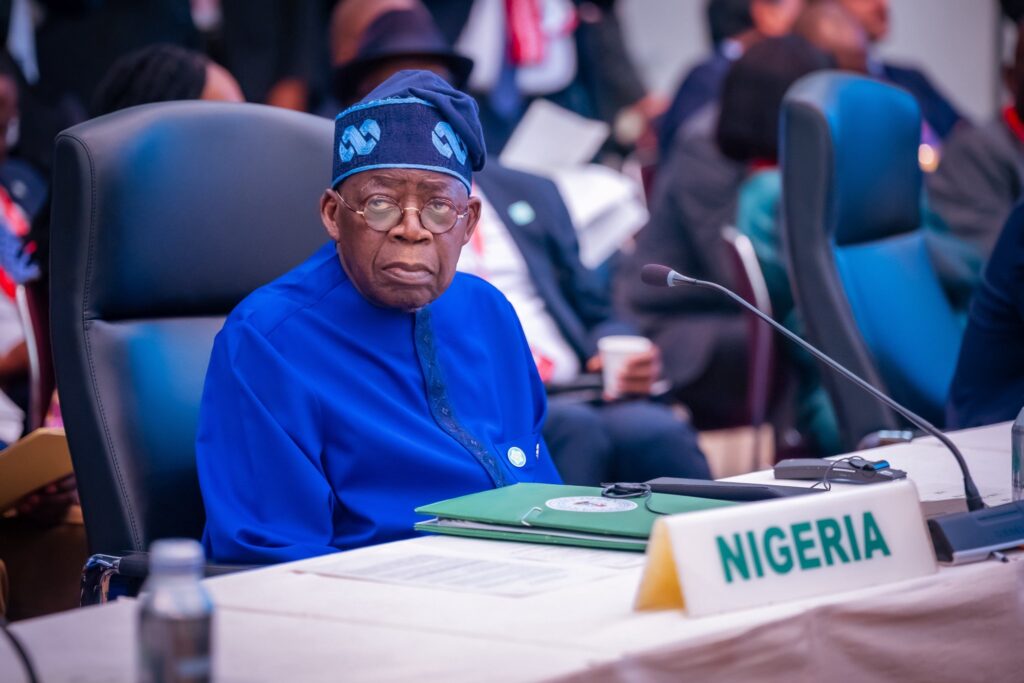
President Bola Tinubu
Abdullateef Fowewe
President Bola Tinubu has welcomed the World Bank’s October 2026 Nigeria Development Update, describing its findings as confirmation that his administration’s economic reforms are yielding results and putting the economy on a firmer path for growth.
In a statement issued Sunday by Special Adviser on Information and Strategy Bayo Onanuga, the President said the report, titled Beyond the Federal Purse: How Higher Revenues Reshaped State Priorities, shows the poverty rate has stabilised for the first time since 2019.
The World Bank expects poverty to decline gradually as GDP growth outpaces population growth.
“These findings confirm that the difficult but necessary decisions to remove the petrol subsidy, unify the foreign exchange market and strengthen fiscal discipline have raised revenues, stabilised the economy and created fiscal space for every tier of government to invest in its people,” the statement quoted Tinubu as saying.
Key points highlighted from the report include economic growth of 4.2 per cent in the first half of 2026 (up from 3.9 per cent in the same period of 2025), inflation falling from 27.6 per cent in January 2025 to 15.2 per cent by December 2025, a stronger external position with the current account surplus rising to $12.0 billion, and gross external reserves climbing to $53.8 billion by the end of August 2026.
The report credits reforms implemented since 2023 with boosting federation revenues by 69 per cent in real terms between 2023 and 2025.
States, the largest beneficiaries, raised capital spending by 151 per cent in real terms, directing most of the increase toward roads, transport, agriculture, energy and housing.
Internally generated revenue grew in real terms in 31 of 35 states, while overall public debt is projected to ease from 40.0 per cent of GDP in 2025 to 38.1 per cent in 2026.
Tinubu acknowledged that more work remains, particularly on lowering food prices and creating jobs for young people.
He reaffirmed commitment to the Renewed Hope Agenda, including expanded cash transfers (already reaching more than 10 million households), accelerated CNG deployment, higher agricultural productivity, and improved access to healthcare and education.
Since taking office in 2023, the Tinubu administration has pursued major fiscal and monetary reforms, including the removal of the longstanding petrol subsidy and the unification of Nigeria’s multiple foreign-exchange windows.
These measures initially triggered sharp inflation and cost-of-living pressures but were defended by the government as necessary to restore fiscal sustainability and attract investment.
The World Bank and other international institutions have periodically assessed the impact of these policies.