

Video: Fires, breach at Spain–Morocco Frontier leave nine dead, PM Sánchez tags it “attack on Spain’s territorial integrity”
Abdullateef Fowewe
Spain deployed military forces to its North African enclave of Ceuta after a mass breach of the border with Morocco on July 30, 2026, in which thousands of migrants surged into the territory and at least nine people died, according to initial official reports.
The violence quickly spilled over into fire and chaos.
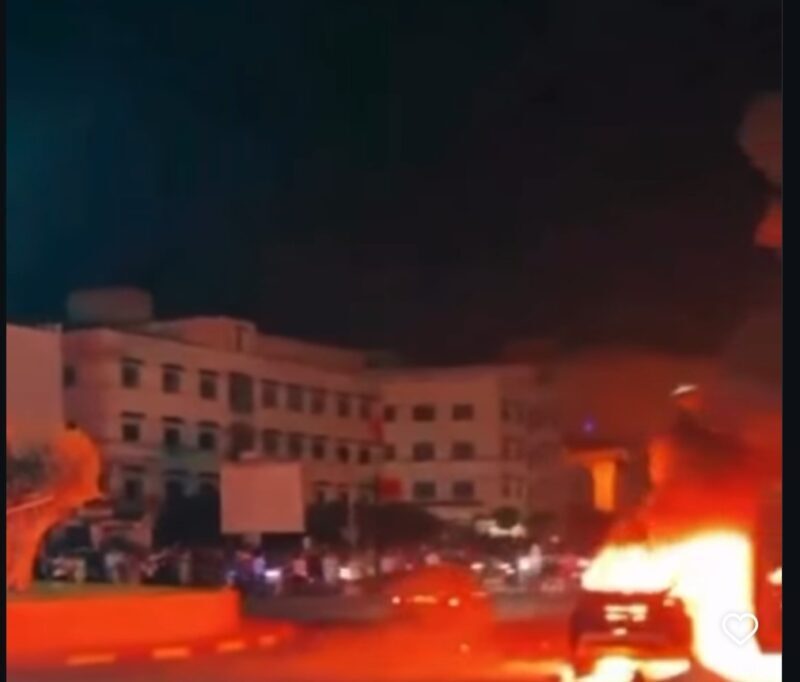
Footage from the Moroccan side of the frontier showed vehicles burning and thick smoke rising into the night sky as clashes erupted near border checkpoints and gated sections of the fence.
Crowds gathered around tents and barriers, while people moved through disrupted traffic lanes amid visible flames, underscoring the scale of the disorder.
Local and international media reported that the unrest began with a larger overrun of the Ceuta fence, followed by further clashes at Melilla’s Beni Nacer crossing, where migrants set vehicles ablaze after confrontations with security forces.
Authorities described scenes of “absolute chaos” as reception centers in Ceuta were overwhelmed and hundreds of arrivals were left sleeping on the streets.
Spain’s government said the armed forces would assist the Civil Guard “to maintain security in the city of Ceuta,” after the regional leader requested a national emergency and army deployment.
Spanish Prime Minister Pedro Sánchez issued a forceful statement condemning the mass crossing, framing it as a direct challenge to Spain’s sovereignty.
“What has happened is an attack on Spain’s territorial integrity and deserves our most resounding and energetic condemnation,” Sánchez said.
He pledged full national backing for Ceuta and its residents, “All of Spain stands with the people of Ceuta. The Government of Spain stands with the Autonomous City.”
Sánchez also committed the state’s full resources to restoring order, “We will use all the resources of the State to guarantee security and coexistence. And our total and resounding commitment to the future of the Autonomous City of Ceuta.”
The prime minister visited Ceuta on Friday alongside Interior Minister Fernando Grande-Marlaska, amid mounting pressure over border control in Spain’s North African enclaves and public criticism of the government’s response.