
Video: Iran defies US collapse forecasts — Iranian President
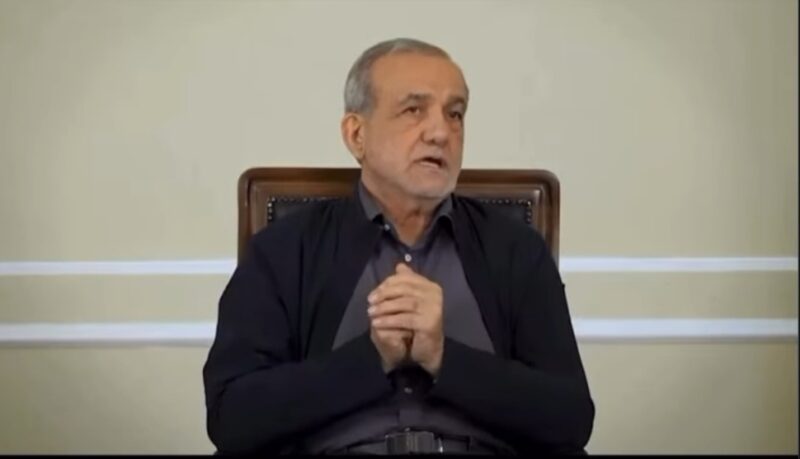
Iranian President, Masoud Pezeshkian
Abdullateef Fowewe
Iranian President, Masoud Pezeshkian has pushed back against expectations that prolonged sanctions would trigger economic collapse.
Speaking in a press conference, Pezeshkian stated that coordinated outreach to industrialists, chambers of commerce and guilds has helped blunt the blow even as oil sales and foreign currency remain constrained.
Pezeshkian framed sanctions as a persistent drag rather than a knockout punch, noting that foreign analysts are now “surprised” the economy has held up.
“They expected the country to collapse because of the pressures they applied.
“They applied this pressure and made our economy more difficult day by day, causing us to face problems. Now, in their analyses, they are surprised as to why we haven’t collapsed,” Pezeshkian said.
The president credited regular consultations with business groups for identifying and easing bottlenecks, while stressing that the government cannot solve everything quickly.
“We’ve had meetings with industrialists, the Chamber of Industry, the Chamber of Commerce, and guilds. With their help, we are trying to remove the obstacles from their path.
“They have come to our aid to solve the problems,” he said.
Pezeshkian acknowledged that sanctions remain a structural constraint, especially where reduced oil revenues limit access to foreign currency.
“Sanctions are a reality. When we cannot sell our oil, it means we will not have foreign currency, or we will have less,” he said.
“When we have less, naturally we will face problems and we must find a way to mitigate these problems as much as we can. This will happen, but it’s difficult for it to happen quickly.”
The comments come as the administration enters its third year amid layered shocks: intensified sanctions, military and security pressures, drought and energy shortages.
Officials have repeatedly emphasised national unity and public resilience as pillars of Tehran’s “resistance economy.”
Alongside domestic mobilisation, Tehran is prioritising expanded trade with neighbors and alternative corridors to offset blocked seaborne routes.
Pezeshkian has argued that closer ties with neighbouring countries sustain commerce even when banking channels are restricted, at times via barter arrangements.
External assessments warn that Iran’s economy remains fragile, with the IMF projecting a 6.1% contraction in 2026, inflation near 68.9% and unemployment around 9.2%, underscoring the gap between political messaging about resilience and macroeconomic performance.