
Fitch raises Nigeria’s credit outlook to Positive, affirms ‘B’ Rating
Fitch Ratings
Abdullateef Fowewe
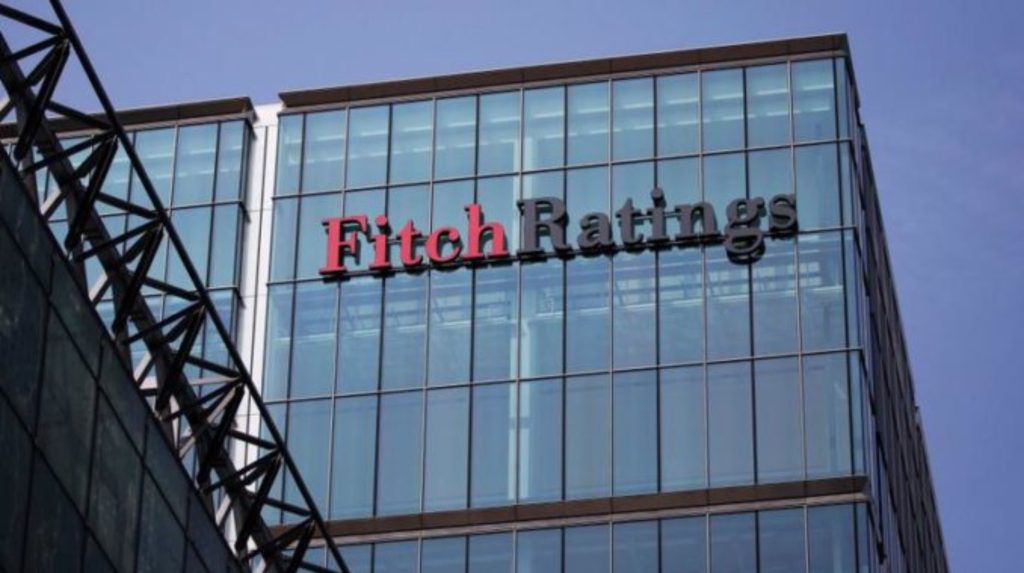
Fitch Ratings has revised the Outlook on Nigeria’s Long-Term Issuer Default Ratings to Positive from Stable while affirming the ratings at ‘B’, the Federal Ministry of Finance announced on Saturday.
The agency’s decision, taken on October 9, reflects “ongoing reform of Nigeria’s policy framework and its increased confidence that reform momentum will be sustained,” according to the ministry’s press release.
A Positive Outlook signals that the rating could be raised if current trends continue.
Fitch pointed to greater naira flexibility, disinflation and faster-than-expected accumulation of foreign exchange reserves. Gross reserves stood at USD 54.9 billion on September 25, 2026, up from USD 32 billion in mid-April 2024, supported by increased formalisation of foreign exchange transactions, strong portfolio inflows, and higher export receipts and remittances.
The agency projects a current account surplus of 6.4 per cent of GDP in 2026.
It also forecast real GDP growth of 4.3 per cent in 2026 (up from 4 per cent in 2025), with growth expected to remain above 4 per cent in 2027 and 2028, driven by non-oil activity.
Average inflation is projected to moderate to 15.4 per cent in 2026 less than half its 2024 level.
Crude oil production has met Nigeria’s OPEC target of 1.5 million barrels per day since May 2026, while the ramp-up of domestic refining is reducing refined product imports.
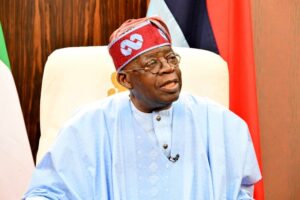
Finance Minister and Coordinating Minister of the Economy Taiwo Oyedele said the move, together with earlier positive actions by S&P Global Ratings (which upgraded Nigeria to ‘B’ from ‘B-’ in May) and Moody’s (which revised its outlook to Positive in August), as well as FTSE Russell’s return of Nigeria to Frontier Market status, reflects “a converging and increasingly favourable assessment of Nigeria’s reform trajectory.”
“Fitch’s Positive Outlook further validates the difficult but necessary reforms implemented under the leadership of President Bola Ahmed Tinubu, GCFR, from removing a costly and inequitable fuel subsidy to unifying the exchange rate and the landmark tax reforms,” Oyedele stated.
“Our medium-term ambition is to place Nigeria firmly on the path to investment grade. We are committed to this work, not for the rating itself, but because these reforms will lower Nigeria’s cost of capital, crowd in private investment and create decent jobs at scale.”
The ministry acknowledged areas where Fitch sees room for further progress, including inflation that remains above peer levels, still-low government revenue relative to the size of the economy, and high interest costs as a share of revenue.
The government reaffirmed its focus on sustaining a market-reflective foreign exchange regime, raising non-oil revenue through tax reforms, improving fiscal governance, advancing structural reforms for economic diversification, and converting macroeconomic stability into shared prosperity.
Nigeria has pursued a series of major economic reforms since mid-2023 under President Tinubu, including the removal of the petrol subsidy, unification of the multiple exchange-rate windows, and comprehensive tax reforms aimed at boosting non-oil revenue.
These measures initially contributed to sharp rises in the cost of living and inflation, which peaked well above 30 per cent in 2024 before beginning to ease.
Foreign reserves had fallen to around USD 32 billion by mid-April 2024 amid pressures on the naira and capital outflows.
The Positive Outlook from Fitch marks the latest in a series of improving assessments by international rating agencies and index providers in 2026, signalling growing confidence that the reform programme is delivering stronger external buffers and a more sustainable growth path, even as challenges around revenue mobilisation and the cost of living persist.