
King’s College Lagos not sold, FG clarifies
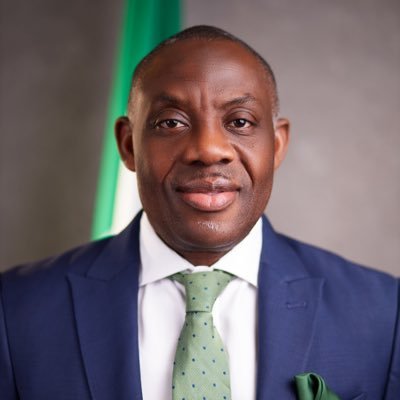
Minister of Education, Tunji Alausa
Abdullateef Fowewe
The Federal Ministry of Education has moved to quell rising anxieties over the status of King’s College, Lagos, insisting the 117-year-old unity school has not been sold or privatised.
In a press release made available on Friday, the ministry said legal title remains with the Federal Government even as the King’s College Old Boys’ Association (KCOBA) takes on financing, rehabilitation and day-to-day operations under a Public-Private Partnership (PPP) concession.
“The Federal Government has reassured students, parents, staff, alumni and the general public that King’s College, Lagos, has not been sold or privatised, stressing that the institution remains a publicly owned national institution, with legal title retained by the Federal Government,” the statement read.
Education Minister Dr Maruf Tunji Alausa said the arrangement is designed to mobilise private investment and management capacity without transferring ownership.
“Let me assure Nigerians, particularly the King’s College community, that this concession is not a sale of King’s College. Government has retained legal title to the institution and will continue to exercise its oversight responsibilities,” Alausa said.
Under the concession, KCOBA will fund and execute major upgrades—covering academic and administrative blocks, hostels, staff quarters, laboratories, libraries, dining and health facilities, utilities, sports and recreational infrastructure, as well as landscaping and drainage works.
The deal also provides for new classrooms, labs, hostels, specified sports facilities and improved learning resources and digital tools.
Admissions, the minister stressed, will continue to follow federal unity college policies on merit, transparency, fairness and national representation, including equitable intake from all 36 states and the FCT.
JSS1 entry will still hinge on a rigorous testing regime with the National Common Entrance Examination (NCEE) central to the process.
On fees, Alausa clarified that the agreement “does not prescribe an automatic increase in school fees,” while also noting it “does not establish a permanent fee freeze.”
The core aim, he said, is to address long-standing infrastructure deficits and secure the school’s long-term sustainability.
Addressing staff concerns, the minister said a formal Staff Transition and Protection Framework will guide an orderly handover while safeguarding welfare and continuity of teaching, boarding, security and other essential services.
Pre-transition obligations such as arrears, pensions and gratuities remain the government’s responsibility unless expressly assumed by KCOBA; thereafter, KCOBA will cover operating costs including salaries and benefits for personnel engaged under the project.
The ministry added that the concession includes measurable Key Performance Indicators (KPIs), asset-condition standards, academic and student-development metrics, regular reporting, audits, inspections and independent verification.
Government retains corrective and “step-in” powers for persistent underperformance or serious default, while KCOBA is barred from selling or transferring concession assets without approval and from asset stripping or deterioration beyond agreed standards.
Instead of a conventional concession fee, KCOBA’s obligations are structured around capital investment, operational funding, infrastructure modernisation and institutional strengthening tied to performance.
“Our responsibility is to protect the integrity and public purpose of King’s College while ensuring that the institution receives the investment, infrastructure and management capacity required to meet the needs of present and future generations,” Alausa said.