

Local content must create value for Nigerians – Verheijen
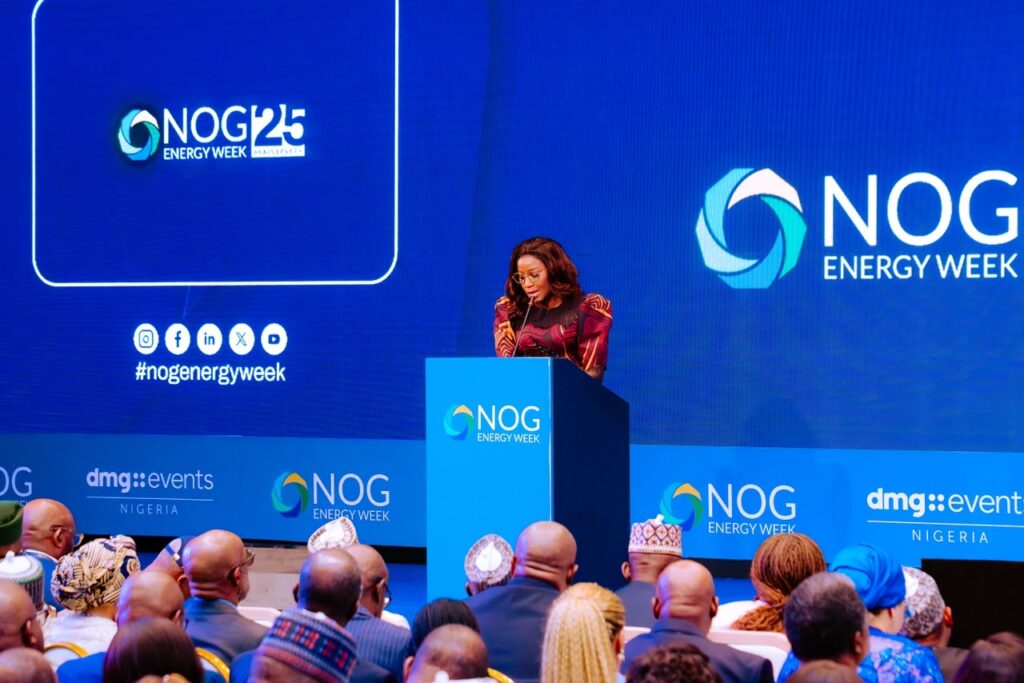
Nike Popoola
The Special Adviser to the President on Energy, Olu Verheijen, has said Nigeria’s local content policy must focus on creating real value for citizens rather than driving up project costs, stressing that reforms in the oil and gas sector should translate into jobs, industrial growth and improved living standards.
Speaking at the 2026 NOG Energy Week in Abuja, Verheijen said local participation must be matched by efficiency, transparency and competitiveness to attract investment and strengthen Nigeria’s position as Africa’s leading energy destination.
According to her, “Local content must create value, not inflation. Regulation must accelerate, not obstruct. Policy must invite capital, not frighten it away.”
She warned that every unnecessary delay in project approvals amounts to lost economic opportunities, saying projects delayed in Nigeria often end up benefiting competing countries through investments, jobs and industrial development.
Verheijen said the Federal Government’s ongoing reforms under President Bola Tinubu had improved investor confidence through fiscal adjustments, regulatory clarity, streamlined approvals and targeted incentives.
She disclosed that Nigeria is targeting crude oil production of three million barrels per day and 10 billion standard cubic feet of gas daily by the end of the decade, with more than $50 billion worth of upstream projects currently in the investment pipeline.
According to her, over $10 billion in Final Investment Decisions have been recorded in the past three years, while crude oil and condensate production has increased by about 400,000 barrels per day since 2023.
She also highlighted reforms in the electricity sector, describing the Presidential Power Sector Financial Reforms Programme as a ₦4 trillion initiative aimed at restoring confidence across the power value chain through the resolution of legacy debts and improved payment discipline.
On gas development, Verheijen said Nigeria was expanding domestic liquefied petroleum gas supply and implementing tax incentives to improve affordability.
She noted that the Federal Government had zero-rated VAT on LPG and related equipment, while Import Duty Exemption Certificates worth about $92.6 million had been approved for LPG infrastructure projects since January 2024.
Verheijen described gas as Nigeria’s industrial backbone, saying it would support electricity generation, fertiliser production, petrochemicals, compressed natural gas mobility and cleaner household cooking.
She added that indigenous participation in Nigeria’s gas sector had risen from 69 per cent to 83 per cent, while large-scale investments such as the Dangote Refinery demonstrate Africa’s growing industrial capacity.
Calling for sustained reforms, Verheijen said Nigeria must continue to transform its energy resources into industries, infrastructure, employment and long-term prosperity.