
Nigeria launches HOPE-Edu programme with $552m World Bank funding to transform education sector
Abdullateef Fowewe
The Federal Government has launched five flagship programmes under President Ahmed Tinubu’s Renewed Hope Agenda, marking a major step in Nigeria’s human capital development.
The initiatives, NG-CARES, SOLID, HOPE-Gov, HOPE-Edu, and HOPE-PHC — represent a coordinated push across education, healthcare, governance, resilience, and institutional capacity.
In a statement on Friday, Minister of Education Dr Maruf Tunji Alausa described HOPE-Edu as a “transformative investment in the future of our nation.”
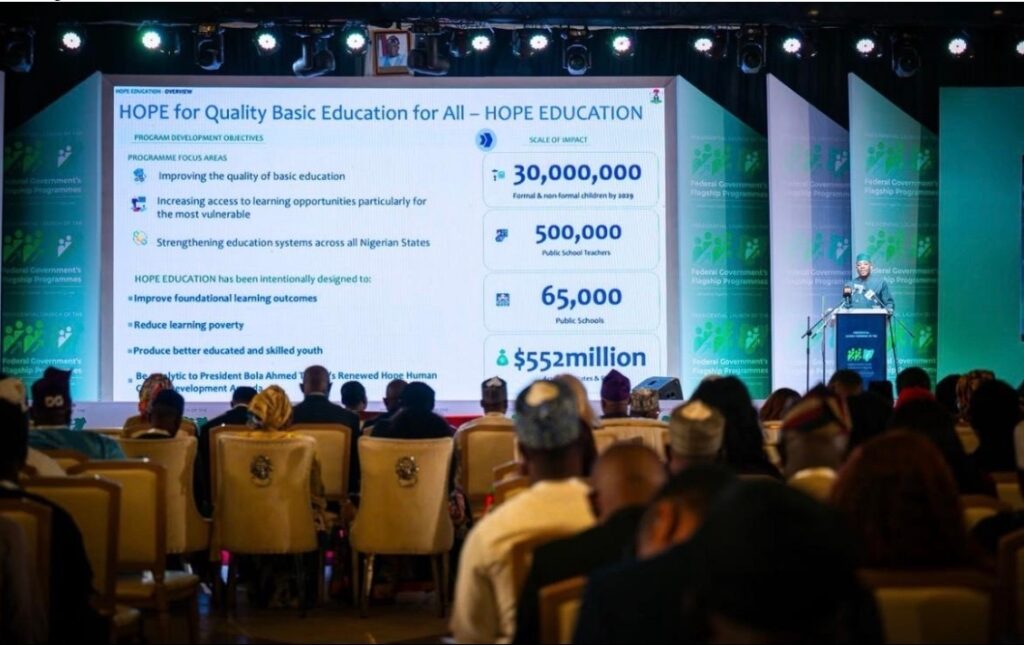
The programme, backed by a $552 million World Bank investment, aims to improve learning outcomes, expand access to quality basic education, strengthen education systems, and accelerate reforms under the Nigeria Education Sector Renewal Initiative (NESRI).
The minister highlighted the programme’s ambitious targets, benefiting over 29 million children, supporting more than 500,000 teachers, strengthening 65,000 public schools, and improving learning opportunities across 10,000 non-formal learning centres nationwide.
“These are more than statistics; they represent millions of children whose futures will be shaped by access to quality education. Education remains the foundation of national development and the engine of a thriving democracy and competitive economy,” Dr. Alausa said.
The minister commended President Tinubu for his “bold vision and unwavering commitment” to human capital development and reaffirmed the ministry’s dedication to delivering meaningful outcomes.
“One Agenda. Five Flagship Programmes. One Nigeria. Together, we are transforming lives through education,” he concluded.